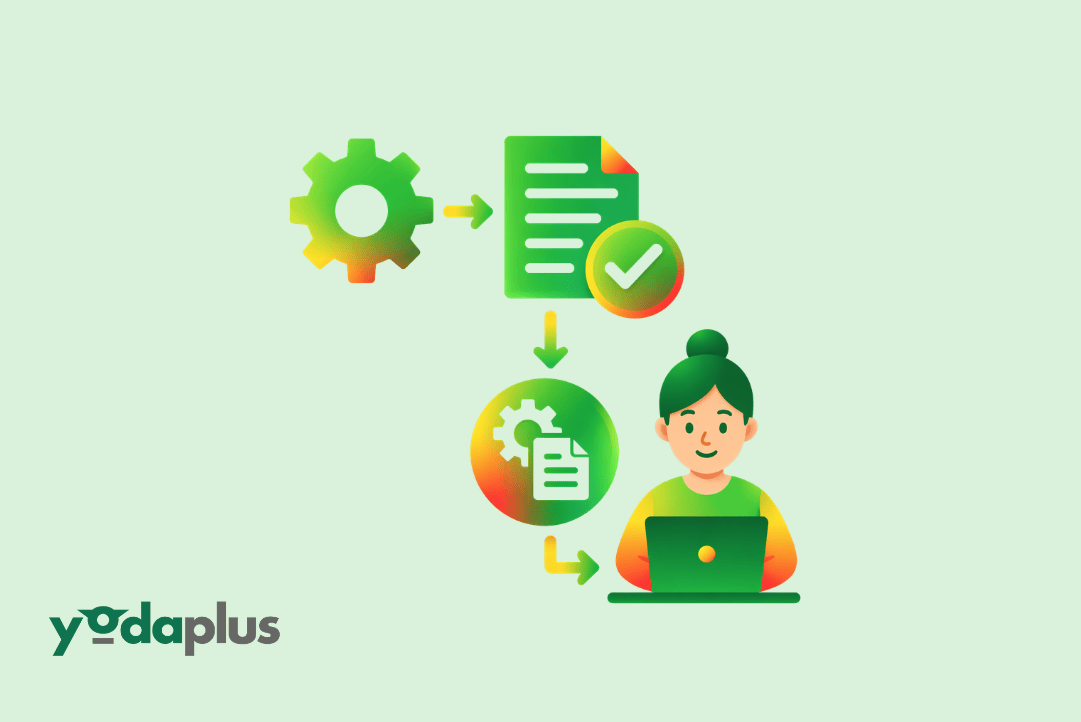
How Do Companies Automate Approvals Inside ERP Systems?
April 17, 2026 By Yodaplus
Approval bottlenecks are one of the biggest challenges inside ERP systems. Many processes depend on multiple levels of validation, which often leads to delays, missed deadlines, and operational inefficiencies. Manual approvals slow down procurement cycles, impact vendor relationships, and create gaps in compliance. This is where procurement
becomes essential. By embedding intelligent workflows into ERP systems, companies can streamline approvals, reduce manual effort, and ensure faster decision-making. With the rise of Agentic AI, Artificial Intelligence, AI Agents, and LLMs, approval workflows are no longer static. They are becoming dynamic systems that can evaluate, decide, and act with minimal human intervention.
Traditional Approval Workflows
Traditional ERP approval workflows follow a structured path. A request is created, routed to managers, and approved or rejected based on predefined hierarchies. For example, in purchase order creation, a request may need approvals from multiple stakeholders depending on value or category. While this structure ensures control, it often lacks flexibility. Delays occur when approvers are unavailable or when workflows require multiple back-and-forth interactions. In many cases, po automation is limited to routing requests rather than improving the decision process itself. This results in slow approvals and reduced efficiency.
Challenges in Manual Approvals
Manual approval systems create several operational challenges. First, they are time-consuming. Each step depends on human intervention, which increases processing time. Second, they are prone to errors. Missing information or incorrect data can lead to rework. Third, they lack visibility. Teams often struggle to track the status of approvals in real time. In procurement process automation, these issues become more critical because delays can impact supply chain operations. Manual approvals also make it difficult to enforce consistent policies. Different approvers may apply different criteria, leading to inconsistencies. In automation in retail environments, this can disrupt inventory planning and vendor coordination.
Rule-Based vs AI-Driven Approvals
Rule-based approval systems use predefined conditions to automate decisions. For example, if a purchase request is below a certain value, it gets auto-approved. While this approach reduces manual effort, it has limitations. It cannot handle exceptions or complex scenarios effectively. AI-driven approvals, powered by Agentic AI and Artificial Intelligence, go beyond fixed rules. They analyze context, historical data, and business patterns to make decisions. AI Agents can evaluate multiple factors such as supplier reliability, past transaction data, and urgency of the request. This makes approvals more accurate and adaptive. In procurement automation, this shift allows companies to move from rigid workflows to intelligent decision systems. LLMs further enhance this capability by interpreting unstructured data such as emails, contracts, and supporting documents.
Role of AI Agents in Decision-Making
AI Agents play a central role in automating approvals within ERP systems. They act as decision-making units that can process data, evaluate conditions, and trigger actions. In agentic ai workflows, multiple agents collaborate to complete approval tasks. One agent may validate data, another may assess risk, and a third may finalize the decision. This layered approach improves accuracy and reduces dependency on manual intervention. AI Agents can also learn from past approvals and refine their decision-making over time. For example, in purchase order creation, an AI Agent can automatically approve low-risk requests while escalating high-value or unusual cases. This ensures that human attention is focused only where it is needed. LLMs support these agents by providing context and understanding complex inputs.
Benefits of Automating Approvals
Automating approvals inside ERP systems delivers several key benefits. Speed is one of the most important advantages. Automated workflows reduce approval time from hours or days to minutes. This improves overall operational efficiency. Compliance is another major benefit. Automated systems ensure that approvals follow predefined policies and regulatory requirements. This reduces the risk of errors and non-compliance. Auditability also improves with automation. Every action is recorded within the system, making it easier to track decisions and generate audit trails. In procurement process automation, this transparency is critical for financial control and governance. Automation also enhances scalability. As businesses grow, approval volumes increase. Automated systems can handle this growth without additional resources. In automation in retail, this ensures that operations remain efficient even during peak demand periods.
How ERP Approval Automation Is Evolving
ERP approval automation is moving toward more intelligent and adaptive systems. With Agentic AI, workflows are no longer limited to predefined paths. They can adjust based on real-time data and business conditions. AI Agents are becoming more specialized, handling specific approval scenarios with greater precision. LLMs are improving how systems interact with users by generating explanations and providing insights. This makes approval processes more transparent and easier to understand. Companies are also integrating approval workflows across multiple systems, creating a unified decision-making environment. This reduces silos and improves coordination across departments.
Conclusion
Automating approvals inside ERP systems is essential for improving efficiency, accuracy, and compliance. Procurement automation plays a key role in streamlining approval workflows and reducing bottlenecks. With the integration of Agentic AI, Artificial Intelligence, AI Agents, and LLMs, companies can move beyond rule-based systems and adopt intelligent workflows that adapt to business needs. This transformation is especially valuable in automation in retail and supply chain operations where speed and accuracy are critical. Yodaplus Agentic AI for Supply Chain & Retail Operations enables organizations to implement advanced approval automation within ERP systems, helping them achieve faster decisions and better control.
FAQs
What are approval workflows in ERP systems?
Approval workflows are processes that validate and authorize transactions such as purchase orders and invoices.
How does procurement automation improve approvals?
It reduces manual steps, speeds up decision-making, and ensures consistent policy enforcement.
What is the role of AI Agents in approvals?
AI Agents analyze data, make decisions, and automate approval steps within workflows.
How do AI-driven approvals differ from rule-based approvals?
AI-driven approvals use data and context to make decisions, while rule-based approvals rely on fixed conditions.
Why is approval automation important in retail operations?
It ensures faster processing, better inventory management, and improved coordination with suppliers.