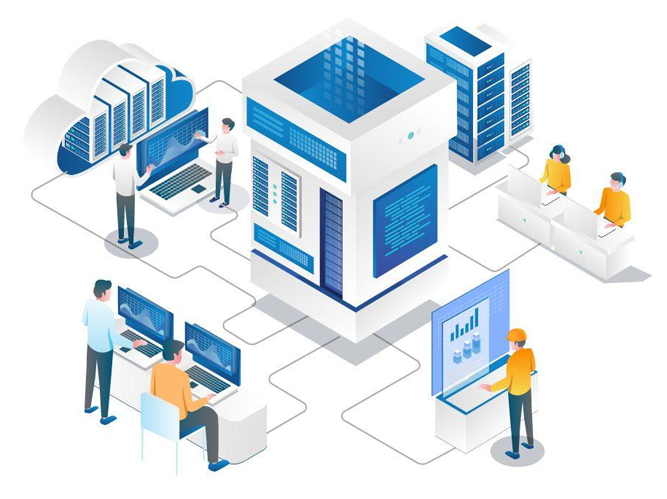
Development banks operate complex, multi-source credit environments. Our Credit Limits Monitoring Framework brings real-time visibility, governance, and a complete audit trail to how limits are created, approved, and managed - replacing fragmented reporting with a single system of record.
Credit limit data lives in too many places - and it never quite matches
Development finance institutions typically manage credit limits across multiple source systems - project monitoring, loan disbursement, portfolio management platforms - each updating on different schedules. The result: reports pulled from the same data on the same day tell different stories.
Add to this the reality that limit creation, approvals, and amendments often happen over email, with no structured workflow and no central record of who approved what, when, and on what basis.
The downstream risks are significant: audit exposure, inconsistent reporting to boards and regulators, and credit decisions made on stale data.
A single framework that connects your sources, governs your limits, and tracks everything
The Yodaplus Credit Limits Monitoring Framework is purpose-built for the institutional complexity of development banks and multilateral lenders. It ingests data directly from your source systems via APIs, eliminating the latency and inconsistency introduced by intermediary data layers.
Limits are managed through a structured governance workflow - not email. Every action is logged, timestamped, and traceable. And a Power BI monitoring layer gives your team a consistent, real-time view across the entire credit portfolio.
DFI-Native Data Model:
Sovereign exposure, blended finance, and impact limits are first-class objects in the data model - not configurations bolted on top of a commercial banking framework. CLF was built for the way development finance institutions actually structure their portfolios, not adapted from it.
Real-Time Data Ingestion:
Fetches data directly from source systems via APIs - bypassing intermediary data warehouses and their async refresh cycles. Daily cadence is standard; real-time activation is built in.
Straight-Through Processing:
Data flows directly from source to the monitoring layer with full lineage tracked at every step. Any exposure can be traced and audited end to end.
Structured Limit Governance:
Limit creation, approvals, and amendments are managed through a defined workflow - no more email chains. Every action is tied to a user, a timestamp, and supporting documentation.
Role-Based Access Control:
Permissions are configured by role and function, ensuring the right people see and act on the right data - with no manual oversight required.
Complete Audit Trail:
Every change to a credit limit - who made it, when, and with what justification - is recorded and retrievable. Fully audit-ready at any point in time.
Power BI Monitoring Layer:
A clean, consolidated dashboard view across your credit portfolio. Consistent data, consistent reporting - regardless of when individual source systems last updated.
The framework replaced a patchwork of reports and email approvals with a single system that our credit team and auditors can both rely on."
- Head of Credit Risk, Leading Development Finance Institution
Deployed at a leading development finance institution managing a multi-billion dollar credit portfolio across global markets.
The pressure on development banks to do more with their balance sheets has never been higher
Since the 2023 Capital Adequacy Framework review, MDBs have been under sustained G20 pressure to optimise balance sheets and lend more without compromising their AAA ratings. Doing this responsibly requires significantly better exposure and limits infrastructure than most institutions currently run.
Three forces are converging at once. Rating agencies - S&P, Moody's, and Fitch - now publish detailed methodology reports on each MDB annually, with risk infrastructure quality named as a factor in rating reviews. Multiple MDBs are mid-recapitalisation, with boards attaching conditions around portfolio visibility and capital efficiency. And internal digital modernisation programs - portfolio management rebuilds, data platform upgrades - are explicitly in motion across peer institutions.
The institutions that move early on exposure and limits infrastructure will be better positioned on all three fronts.
We know the systems your institution runs - and what comes next
FACT, the credit rating and risk system widely used across the development bank community, is being discontinued. Institutions are now evaluating what replaces it - from Moody's new offering to options on the Salesforce AppExchange.
Yodaplus brings direct, hands-on experience with FACT implementation through our development bank engagements. We also have deep familiarity with adjacent systems like ACBS that sit within the same institutional tech stack.
Whether you are in early evaluation or already scoping an implementation, we can help - as a systems integrator who understands both the technical and institutional context of development finance environments.
Multilateral Development Banks
(MDBs)
Development Finance Institutions
(DFIs)
Regional and Bilateral Development Banks
Credit Risk and Portfolio Monitoring Teams
Treasury and Operations Functions at Institutional Lenders

We have worked with development finance institutions across geographies to deploy and configure the Credit Limits Monitoring Framework. If your team is managing credit limits across fragmented systems - or evaluating your options as FACT winds down - let's talk.
Request a Demo