How Does AI Automate Supplier Invoice Processing?
July 30, 2026 By Yodaplus
Supplier invoice processing is one of the most repetitive and document-heavy tasks in procurement and finance. Every invoice must be captured, verified, matched against purchase orders and goods receipts, approved, and recorded before payment. When these activities are handled manually, they slow down the procure to pay process and increase the risk of errors, duplicate payments, and delayed supplier settlements.
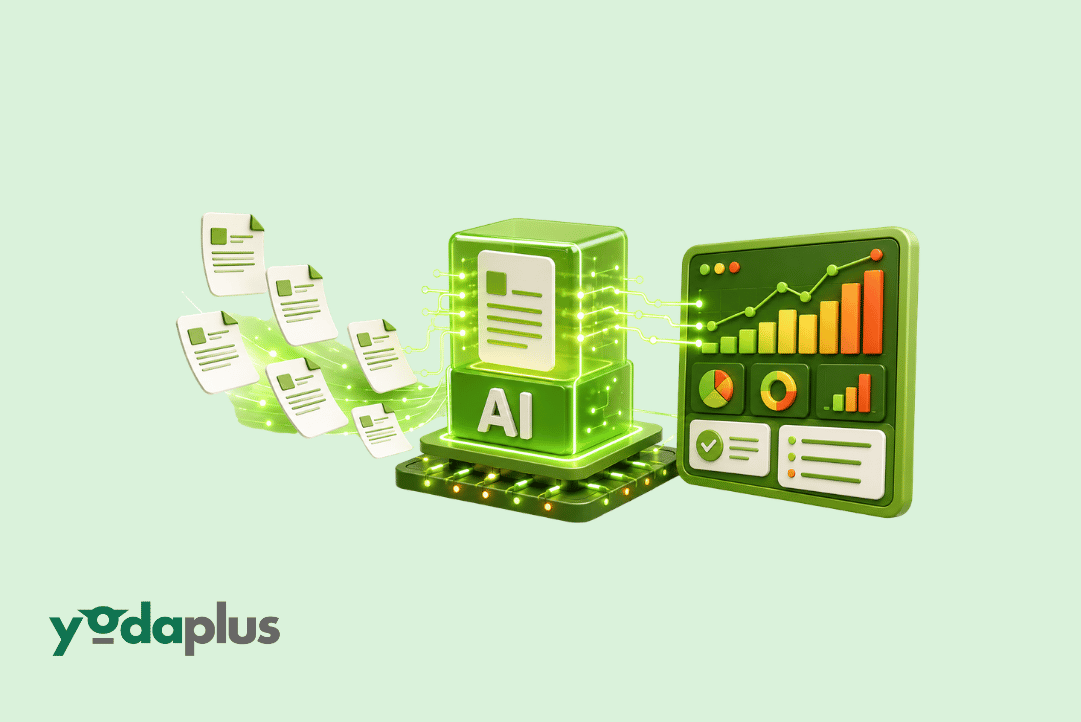
AI is changing this process by automating invoice capture, validation, approvals, and invoice reconciliation. Instead of manually reviewing every invoice, finance teams can focus on resolving only the exceptions while AI handles routine processing. As part of broader invoice processing automation and accounts payable automation, AI improves speed, accuracy, and visibility across the entire procurement cycle.
According to Ardent Partners, organisations using automated invoice processing achieve significantly lower processing costs and faster approval cycles than businesses relying on manual workflows.
Why Traditional Invoice Processing Is Slow
Manual invoice processing requires finance teams to collect invoices from different channels, enter information into ERP systems, compare invoices with purchase orders, request approvals, and investigate discrepancies.
Common challenges include:
- Manual data entry
- Lost invoices
- Duplicate payments
- Approval delays
- Invoice disputes
- High processing costs
- Limited visibility
- Slow supplier payments
As invoice volumes grow, these issues become increasingly difficult to manage.
How AI Automates Supplier Invoice Processing
AI combines optical character recognition (OCR), machine learning, workflow automation, and business rules to automate the entire invoice lifecycle.
Invoice Capture
Invoices received by email, supplier portals, PDFs, or scanned documents are automatically collected and digitised.
AI recognises different invoice layouts without requiring suppliers to use a standard template.
Intelligent Data Extraction
Instead of manually entering invoice details, AI extracts information such as:
- Supplier name
- Invoice number
- Purchase order number
- Invoice date
- Tax information
- Payment terms
- Line items
- Invoice amount
This significantly reduces manual data entry while improving accuracy.
Invoice Validation
Once the information is extracted, AI validates it against predefined business rules.
The system checks for:
- Missing fields
- Duplicate invoices
- Invalid supplier information
- Tax calculation errors
- Pricing inconsistencies
Invoices with no issues continue automatically, while exceptions are flagged for review.
Three-Way Matching
One of the most valuable applications of AI is automating three-way matching.
The AI compares:
- Purchase Order
- Goods Receipt
- Supplier Invoice
If all records match, the invoice proceeds for approval.
If quantities, prices, or received goods differ, the invoice is automatically routed for investigation.
This reduces manual review while improving payment accuracy.
Automated Approval Workflows
Rather than forwarding invoices manually, AI routes them to the appropriate approvers based on business rules.
Approvals may depend on:
- Invoice value
- Department
- Cost centre
- Supplier category
- Purchase type
Automated routing reduces approval delays and provides complete audit trails.
Invoice Reconciliation
AI simplifies invoice reconciliation by comparing supplier invoices with purchase orders, payment records, contracts, and ERP data.
Instead of manually identifying discrepancies, finance teams receive alerts only when exceptions require investigation.
This improves financial accuracy while reducing reconciliation effort.
AI Supports Accounts Payable Automation
Invoice processing is a core component of accounts payable automation.
Once invoices are approved, AI prepares payment information, updates ERP systems, tracks payment status, and provides real-time visibility into outstanding liabilities.
This enables finance teams to process higher invoice volumes without increasing administrative workload.
Benefits for Procurement and Finance
AI-powered invoice automation delivers measurable improvements across procurement and finance operations.
Some of the biggest benefits include:
- Faster invoice approvals
- Reduced manual data entry
- Improved invoice accuracy
- Better compliance
- Lower processing costs
- Stronger supplier relationships
- Faster payment cycles
- Improved financial visibility
- Better audit readiness
These improvements strengthen both procurement and finance functions while supporting more efficient business operations.
AI Improves Vendor Management
Accurate vendor management begins with reliable supplier information.
AI helps organisations validate supplier records during vendor onboarding, detect duplicate vendors, identify missing information, and monitor supplier performance throughout the procurement lifecycle.
When supplier data remains accurate, invoice processing becomes more reliable and payment exceptions decrease.
AI Strengthens Procure-to-Pay Automation
Supplier invoice processing does not operate independently.
It connects directly with purchasing, procurement, inventory management, and finance.
As part of broader procure-to-pay automation, AI integrates invoice processing with:
- Purchase order automation
- Procurement approvals
- Inventory management
- Goods receipt verification
- Payment processing
- Financial reporting
This creates a connected workflow where information flows automatically between departments.
Best Practices for AI-Powered Invoice Processing
Organisations implementing AI should focus on building a strong procurement foundation before scaling automation.
Some recommended practices include:
- Maintain accurate supplier master data.
- Standardise invoice submission processes.
- Integrate AI with ERP and finance systems.
- Configure automated three-way matching rules.
- Monitor invoice exceptions continuously.
- Track processing time and payment accuracy.
- Review AI performance regularly.
These practices improve adoption while delivering consistent business value.
Conclusion
AI is transforming supplier invoice processing by automating data capture, validation, approvals, invoice reconciliation, and three-way matching. Instead of spending valuable time on repetitive administrative work, finance teams can focus on exception handling, supplier relationships, and financial analysis. As part of broader accounts payable automation and procure-to-pay automation, AI helps organisations improve accuracy, reduce processing costs, and create faster, more transparent procurement operations.
Yodaplus Agentic AI Supply Chain and Retail Operations help organisations modernise procurement and finance through intelligent invoice processing automation, vendor management, vendor onboarding, purchase order automation, and end-to-end procurement digitization. By integrating AI agents with enterprise systems, Yodaplus enables businesses to automate complex workflows while improving visibility, compliance, and operational efficiency.
FAQs
AI captures invoices, extracts data, validates information, performs three-way matching, routes approvals, and updates ERP systems with minimal manual intervention.
Invoice processing automation uses AI and workflow software to manage supplier invoices from receipt through payment, reducing manual effort and improving accuracy.
Three-way matching compares the purchase order, goods receipt, and supplier invoice before payment is approved to prevent errors and duplicate payments.
AI speeds up approvals, reduces manual data entry, improves invoice reconciliation, detects exceptions, and provides real-time visibility into payment status.
AI connects procurement, finance, supplier management, and payment processes into a single automated workflow, improving efficiency, compliance, and supplier relationships.