What Is Procure-to-Pay (P2P) and How Does the Process Work?
July 2, 2026 By Yodaplus
Every business purchases goods or services to keep operations running. Whether it’s raw materials for manufacturing, office equipment, software licenses, or professional services, purchasing is a routine business activity. However, buying something isn’t as simple as placing an order. It involves approvals, supplier selection, purchase orders, invoice verification, and payment. This complete business workflow is known as the Procure-to-Pay (P2P) process.
The procure to pay process connects procurement and finance into a single workflow that begins when a business identifies a purchasing need and ends when the supplier receives payment. When managed efficiently, P2P helps organizations control spending, improve supplier relationships, maintain compliance, and gain better visibility into procurement activities. As businesses continue investing in procurement digitization, many are replacing manual purchasing processes with procure-to-pay automation to improve speed, accuracy, and operational efficiency.
What Is Procure-to-Pay (P2P)?
Procure-to-Pay, often abbreviated as P2P, is the complete process of purchasing goods or services and paying the supplier. It covers every stage of procurement, including requesting products, selecting vendors, creating purchase orders, receiving goods, processing invoices, and completing supplier payments.
Rather than treating procurement and finance as separate departments, P2P creates a connected workflow where purchasing decisions, supplier information, invoices, and payments remain synchronized throughout the process.
A well-managed P2P process gives organizations better financial control while ensuring purchases follow company policies and approved budgets.
How Does the Traditional Procure-to-Pay Process Work?
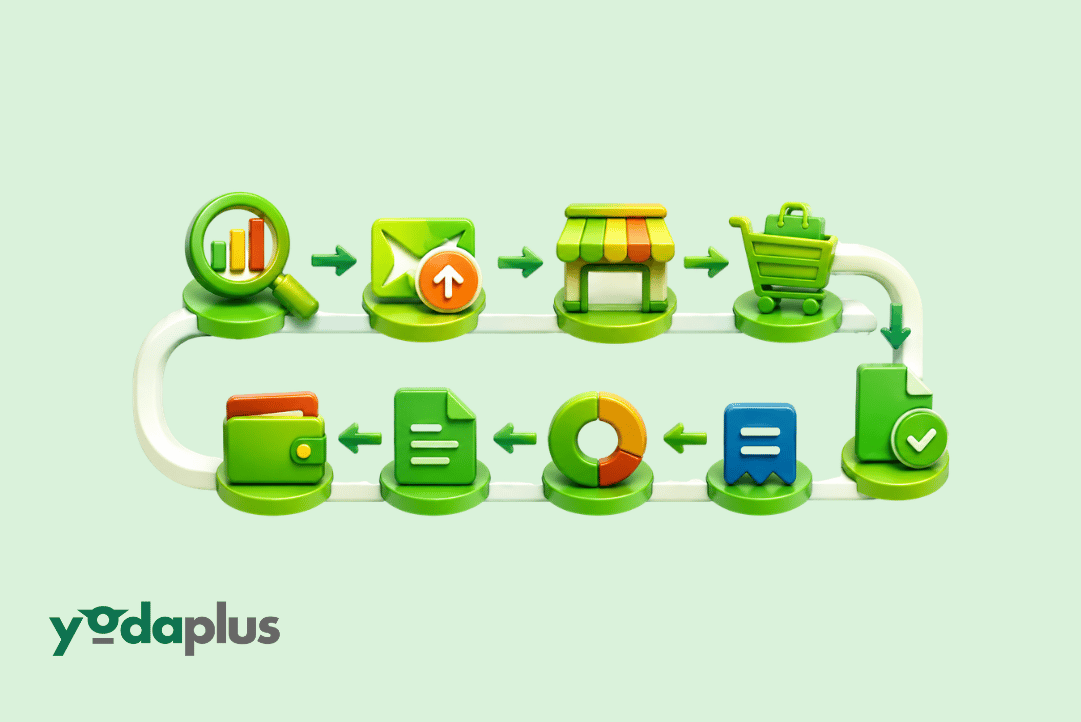
Although every organization has slightly different procurement policies, the traditional P2P process usually follows the same sequence.
A department identifies the need for a product or service and submits a purchase request.
The request is reviewed by managers or procurement teams before approval.
Once approved, the procurement team creates a purchase order and sends it to the supplier.
The supplier delivers the requested goods or services.
After delivery, the supplier sends an invoice requesting payment.
The finance team compares the invoice with the purchase order and delivery records before approving payment.
Once verified, payment is processed and the transaction is recorded.
While this workflow appears straightforward, each stage often involves multiple emails, spreadsheets, manual approvals, and disconnected business systems.
Traditional Procure-to-Pay Workflow
Why Traditional P2P Processes Become Inefficient
Manual procurement works reasonably well for small businesses with limited purchasing activity. As organizations grow, however, the number of suppliers, purchase requests, invoices, and approvals increases significantly.
Procurement teams spend hours creating purchase orders manually.
Managers approve requests through emails.
Finance teams manually enter invoice data into accounting systems.
Supplier records become duplicated across different applications.
Invoices often require multiple follow-ups before payment can be approved.
These inefficiencies increase administrative costs while making it difficult to monitor organizational spending.
Without centralized vendor management, businesses also struggle to evaluate supplier performance, negotiate better pricing, or maintain accurate supplier records.
Where Procurement Automation Improves the Process
Modern procurement automation replaces manual activities with connected digital workflows.
Instead of creating purchase orders manually, purchase order automation generates documents automatically after approvals are completed.
Supplier information is stored centrally, making vendor onboarding faster while ensuring procurement teams work with approved suppliers.
Invoices are captured digitally through invoice processing automation, reducing manual data entry and improving accuracy.
The result is a faster procurement process with fewer delays and greater visibility into purchasing activities.
Why Invoice Processing Is Critical
Invoice management is often one of the most time-consuming stages of procurement.
Finance teams must review invoices, compare them with purchase orders, verify delivery information, identify discrepancies, and approve payments.
Without automation, this process creates bottlenecks that delay supplier payments and increase operational costs.
Modern invoice automation simplifies these activities by extracting invoice information automatically and routing documents through predefined approval workflows.
Businesses reduce manual effort while improving payment accuracy and supplier satisfaction.
The Importance of Three-Way Matching
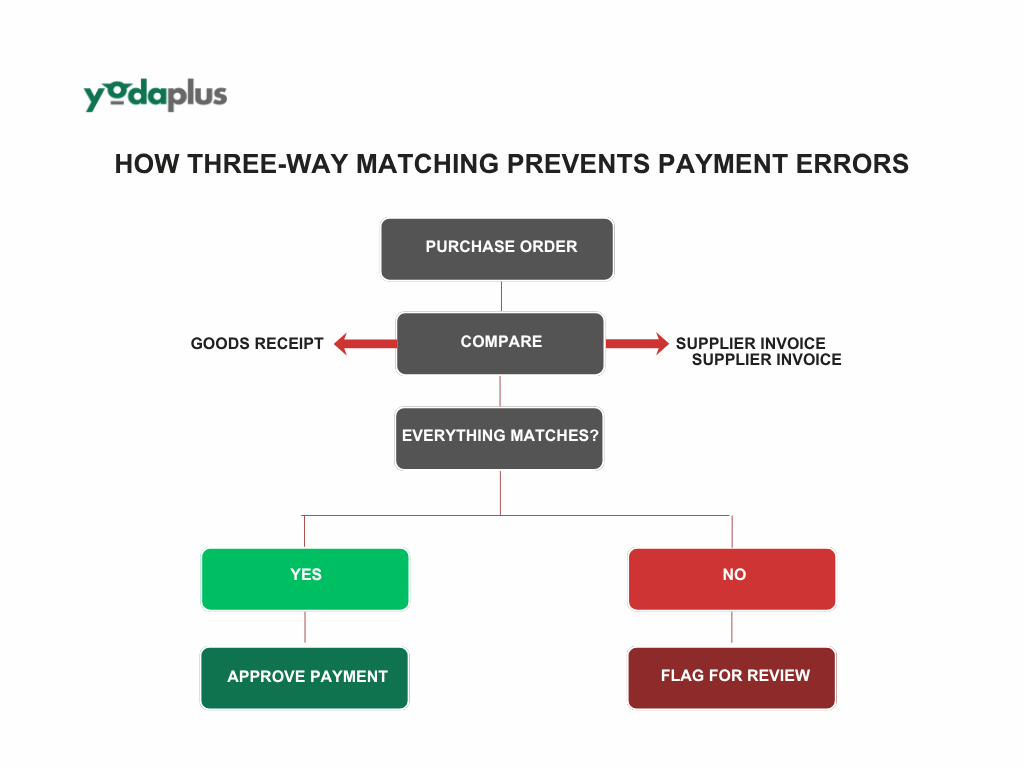
One of the most important controls within procure-to-pay automation is three-way matching.
Before an invoice is paid, the system compares three documents:
- Purchase Order
- Goods Receipt
- Supplier Invoice
If all three match, payment can proceed.
If differences exist, the invoice is flagged for review before payment is approved.
Three-way matching helps prevent duplicate payments, incorrect invoices, pricing errors, and procurement fraud while improving financial accuracy.
How Procurement Automation Improves P2P
As businesses grow, manually managing every purchase request, invoice, and payment becomes increasingly difficult.
This is where procurement automation delivers value.
Instead of relying on emails and spreadsheets, procurement software automates purchase approvals, creates purchase orders, routes invoices, validates supplier information, and tracks every stage of the purchasing lifecycle.
Purchase order automation ensures approved requests are converted into purchase orders automatically, reducing manual effort and processing time.
Invoice automation captures invoice information digitally, minimizing manual data entry while improving accuracy.
At the same time, accounts payable automation helps finance teams process invoices faster, schedule payments, and maintain complete audit trails.
Together, these technologies create a connected P2P automation workflow that improves visibility across procurement and finance.
Benefits of Procure-to-Pay Automation
Organizations adopting procure-to-pay automation experience improvements across multiple business areas.
Procurement teams spend less time processing paperwork and more time managing supplier relationships.
Finance teams reduce manual invoice processing and payment delays.
Managers gain better visibility into company spending before purchases are approved.
Suppliers receive faster payments and more consistent communication.
Organizations also benefit from improved compliance, stronger financial controls, and more accurate reporting because every purchasing activity is digitally recorded.
Rather than operating as separate procurement and finance functions, businesses create one connected workflow that supports better operational decisions.
Conclusion
The Procure-to-Pay (P2P) process is much more than purchasing goods and paying suppliers. It is a structured workflow that connects procurement, finance, suppliers, approvals, invoices, and payments to ensure every purchase is accurate, compliant, and properly documented. As organizations grow, manual procurement becomes increasingly difficult to manage, making procurement digitization and P2P automation essential for improving efficiency and controlling business spending.
By combining vendor management, vendor onboarding, purchase order automation, invoice processing automation, invoice reconciliation, three-way matching, and accounts payable automation, businesses can streamline purchasing operations while reducing manual work and financial risk.
Yodaplus Agentic AI for Supply Chain & Retail Operations helps organizations modernize procurement through intelligent automation. By combining Agentic AI, intelligent document processing, procurement automation, supplier data management, workflow orchestration, and enterprise system integration, Yodaplus enables businesses to automate complex Procure-to-Pay workflows, improve supplier collaboration, strengthen compliance, and gain complete visibility across supply chain and retail operations.
FAQs
Procure-to-Pay (P2P) is the complete business process of purchasing goods or services, beginning with a purchase request and ending with supplier payment.
The P2P process helps organizations control purchasing, improve compliance, manage supplier relationships, and ensure accurate payments.
Three-way matching compares the purchase order, goods receipt, and supplier invoice before payment is approved, helping prevent payment errors and fraud.
Procurement automation streamlines approvals, purchase order creation, vendor onboarding, invoice processing, and payment workflows, reducing manual effort and improving efficiency.
Procurement automation focuses on purchasing activities, while P2P automation covers the entire lifecycle, including procurement, invoice processing, invoice reconciliation, accounts payable, and supplier payments.
Manufacturing, retail, healthcare, logistics, consumer goods, financial services, and any organization with large supplier networks benefit significantly from Procure-to-Pay automation.