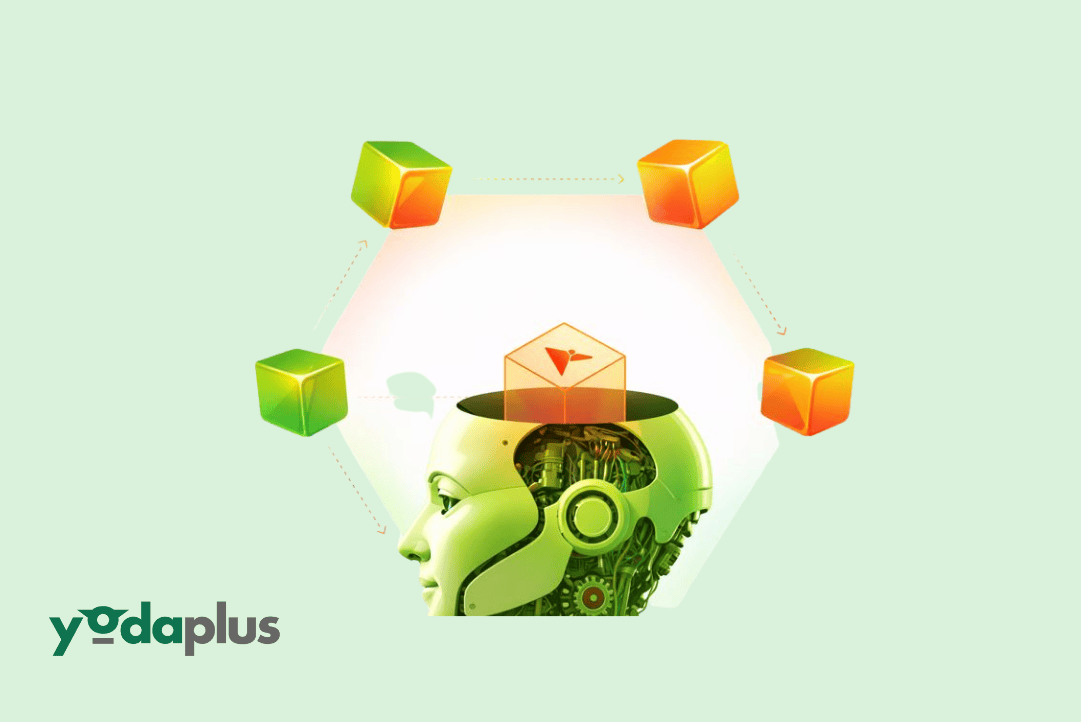
Why the Next AI Moat Is Workflow Design, Not Models
January 13, 2026 By Yodaplus
If everyone can access powerful AI models, where does real advantage come from?
For years, artificial intelligence strategy revolved around models. Bigger models. Smarter models. Faster models. That phase is ending. Today, AI models are widely available, increasingly standardized, and easier to swap. The competitive edge has shifted elsewhere.
The next AI moat is workflow design.
Why AI models no longer create lasting advantage
Large language models, generative AI tools, and open AI frameworks are now accessible to almost every organization. Open models compete closely with proprietary ones. Performance gaps close quickly. New versions arrive every few months.
This means model access alone no longer separates leaders from followers. Two teams using the same AI model can produce very different results. One struggles with unreliable outputs and risk. The other builds dependable AI-powered automation.
The difference lies in how AI workflows are designed.
What workflow design means in AI systems
AI workflows define how intelligence flows through a system. They decide how data enters, how decisions are made, how actions are triggered, and how outcomes are reviewed.
In modern AI systems, this logic is implemented through AI agents and agentic frameworks. Intelligent agents perform focused tasks such as data extraction, reasoning, validation, and summarization. Workflow agents coordinate these tasks in a controlled sequence.
This structure turns generative AI into a reliable system instead of a prompt-based experiment.
Why agentic AI depends on workflows
Agentic AI shifts artificial intelligence from single responses to continuous operation. Autonomous agents observe context, take action, and adjust behavior over time.
Without clear workflows, autonomous systems become unpredictable. Agents overlap responsibilities. Context leaks across tasks. Errors propagate silently.
Workflow design prevents this. It assigns clear roles to AI agents. It defines boundaries between tasks. It enforces decision checkpoints and validation steps.
This is how multi-agent systems remain stable and trustworthy.
Workflow design improves reliability and trust
One of the biggest barriers to AI adoption is trust. Users need to understand why a system behaves the way it does.
Well-designed AI workflows support explainable AI. Each agent has a defined purpose. Each step produces traceable outputs. Decisions link back to inputs and rules.
This structure supports responsible AI practices and simplifies AI risk management. When something goes wrong, teams can identify where and why. This is impossible in loosely connected AI systems driven only by prompts.
Reliable AI does not emerge from smarter models. It emerges from controlled execution.
Why AI workflows outperform raw intelligence
Raw intelligence does not guarantee good decisions. In complex environments, structure matters more than reasoning power.
AI-driven analytics benefit from workflows that separate ingestion, interpretation, and insight generation. Semantic search performs better when knowledge-based systems organize context. Vector embeddings work best when retrieval steps are clearly defined.
Workflow design ensures that each AI model contributes at the right moment, with the right data, for the right purpose.
This is how AI systems scale without chaos.
The operational advantage of strong AI workflows
Organizations that invest in workflow design gain long-term advantages. AI systems become easier to extend. New AI models can replace old ones without rewriting logic. New agents can be added without breaking existing flows.
This flexibility supports continuous AI innovation. Teams can test new generative AI software without risking production stability. They can adapt to regulatory changes without rebuilding systems.
The AI moat becomes operational, not technical.
Why workflow design outlasts model cycles
AI models evolve rapidly. Workflows endure.
A well-designed agentic framework remains valuable even as AI models change. It protects organizations from vendor lock-in. It supports reliable AI across different environments and constraints.
This is especially important in regulated or mission-critical settings where AI systems must remain stable over time.
The future of AI belongs to teams that design systems, not just select tools.
FAQs
Do workflows limit AI capability?
No. Workflows focus AI capability where it matters most and reduce unnecessary variation.
Can workflows work with any AI model?
Yes. Strong workflows allow AI models to be swapped with minimal disruption.
Is workflow design expensive?
It reduces long-term cost by improving reliability and lowering rework.
Conclusion
AI advantage no longer comes from exclusive access to models. It comes from designing workflows that coordinate intelligent agents, control decision paths, and support explainable outcomes. Organizations that master workflow design build AI systems that scale, adapt, and earn trust. Yodaplus Automation Services helps teams design agentic AI workflows that deliver reliable intelligence, not just impressive demos.