Structured vs Unstructured Data in IDP Workflows
January 21, 2026 By Yodaplus
Data is the fuel behind financial automation. But not all data behaves the same way. In financial services, the biggest difference is between structured and unstructured data. Understanding this difference is essential to building effective intelligent document processing workflows.
Many banks invest in automation in financial services but struggle to scale it. The reason is often data, not technology. Structured data flows easily through systems. Unstructured data does not. IDP exists to bridge this gap.
This blog explains structured and unstructured data in simple terms and how they interact inside IDP workflows.
What structured data looks like in finance
Structured data is organized and predictable. It fits neatly into databases and systems.
Examples include transaction records, account balances, customer IDs, and ledger entries. Each value has a defined place and format.
Structured data works well with banking automation. Systems know exactly how to process it. Rules apply cleanly. Workflow automation moves quickly.
This is why early finance automation focused almost entirely on structured data.
What unstructured data looks like in finance
Unstructured data does not follow fixed formats. It appears as documents, text, tables, and mixed layouts.
Examples include invoices, contracts, bank statements, disclosures, emails, and research reports. These documents vary by source and context.
Unstructured data is everywhere in financial services. Yet traditional systems cannot process it easily. Humans must read and interpret it.
This is where automation slows down.
Why unstructured data blocks financial automation
Most financial workflows depend on documents. Even when systems are automated, documents interrupt the flow.
A transaction may be structured, but the approval relies on a document. A report may be automated, but the inputs come from PDFs. This forces manual intervention.
In banking process automation, unstructured data creates pauses, reviews, and delays. Automation remains partial.
Without addressing unstructured data, financial services automation cannot scale.
How intelligent document processing connects the two
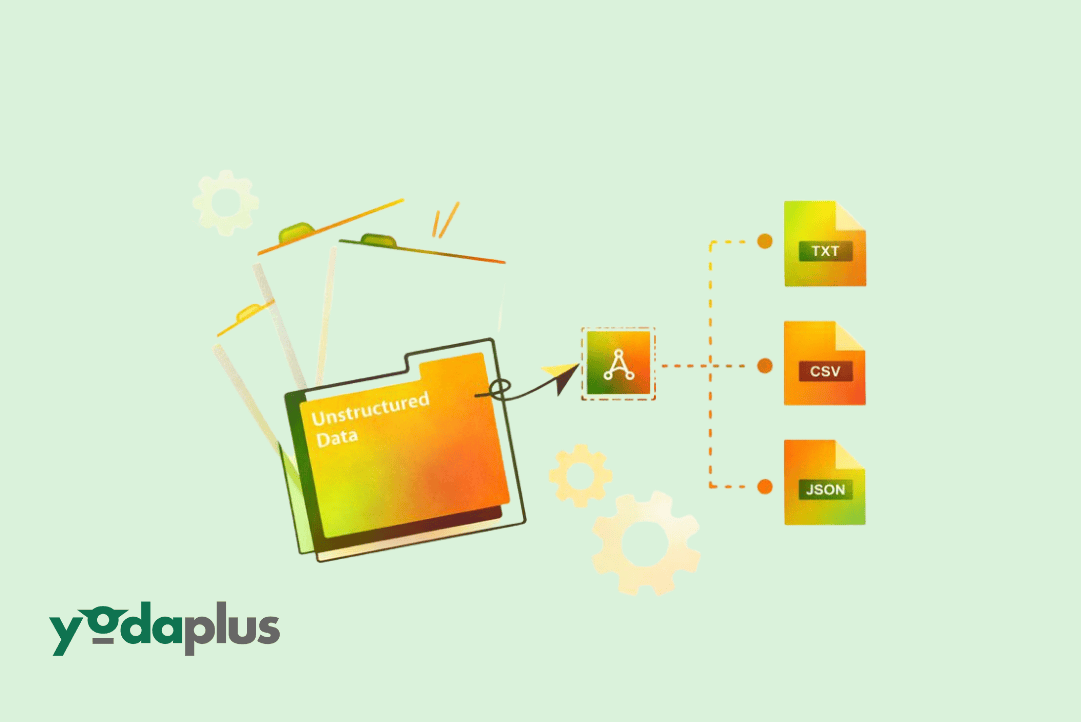
Intelligent document processing exists to convert unstructured data into structured data.
IDP uses artificial intelligence in banking to read documents, understand context, and extract meaningful information. It identifies document types, pulls relevant fields, and validates accuracy.
Once processed, unstructured documents become structured inputs that systems can use.
This conversion is the foundation of financial process automation.
Structured data after IDP
After IDP, document data behaves like structured data.
Extracted values flow into systems. Rules apply consistently. Workflow automation continues without manual breaks.
This allows banking automation to extend into areas that were previously manual. Decisions move faster. Errors reduce. Reviews focus on exceptions.
IDP does not remove documents. It changes how systems interact with them.
Why OCR alone is not enough
OCR plays a role in document processing, but it only extracts text.
OCR does not understand meaning. It cannot tell which number matters. It cannot validate context.
In IDP workflows, OCR is just one step. Intelligence comes from models that understand structure, intent, and relevance.
This is why OCR alone cannot solve unstructured data challenges in ai in banking and finance.
Impact on banking operations
In daily banking operations, IDP reduces friction caused by documents.
Customer onboarding benefits when forms are structured automatically. Compliance improves when documents are searchable and traceable. Operations teams see fewer manual handoffs.
By converting unstructured data into structured data, IDP strengthens banking automation without sacrificing control.
Impact on investment and equity research
The difference between structured and unstructured data is especially visible in investment research and equity research.
Financial models rely on structured data. Research insights often come from unstructured sources like filings and disclosures.
With AI in investment banking, IDP extracts key information from documents and organizes it for analysis. This supports faster creation of an equity research report.
An automated equity report benefits from IDP because analysts spend less time reading documents and more time interpreting results.
Data quality and accountability
Unstructured data increases risk when handled manually. Errors are harder to detect. Sources are harder to trace.
IDP improves accountability by linking structured outputs back to original documents. Every extracted field has a source.
In ai in banking, this traceability supports audits, reviews, and regulatory confidence.
Structured data without context creates risk. IDP preserves both structure and context.
Human oversight still matters
IDP does not eliminate the need for human judgment.
Exceptions require review. Models require monitoring. Business rules evolve.
In automation, humans remain responsible for outcomes. IDP simply removes repetitive work and reduces noise.
This balance is critical for trust in automated financial systems.
Conclusion
Structured data enables automation. Unstructured data slows it down. Intelligent document processing exists to close this gap.
By converting documents into structured, usable data, IDP enables scalable finance automation and reliable banking automation. It allows workflows to move without constant manual interruption.
At Yodaplus Automation Services, we help financial institutions design IDP workflows that turn unstructured documents into structured inputs for real automation. Our focus is on systems that are accurate, explainable, and built for long-term financial operations.