
Intelligent Document Processing as Enterprise Infrastructure
February 24, 2026 By Yodaplus
Most companies treat intelligent document processing as a supporting tool. It is often seen as a software add-on that reads invoices or extracts fields from PDFs. In reality, intelligent document processing should be treated as enterprise infrastructure. It plays a central role in how data flows across procurement, finance, sales, and operations.
Manufacturing and retail companies handle thousands of documents every day. Purchase orders, invoices, delivery notes, goods receipt notes, contracts, shipping records, and compliance documents move across departments. If these documents are handled manually or through disconnected tools, errors increase and workflows slow down. Intelligent document processing changes that. It connects documents directly to business systems and enables real-time automation.
Intelligent Document Processing Is Not Just OCR
Many teams still think intelligent document processing is only about scanning documents. That is outdated thinking. Modern intelligent document processing includes structured validation, context understanding, and data extraction automation that feeds directly into ERP and financial systems.
For example, in a manufacturing setup, an invoice arrives from a supplier. Intelligent document processing reads the invoice, matches it with the purchase order, validates tax details, and pushes the structured data into accounts payable automation. No manual entry is required. The same logic applies in retail procurement automation where speed and accuracy are critical.
When document flows are consistent and reliable, companies can scale procure to pay automation without fear of hidden risks.
Why It Must Sit at the Infrastructure Level
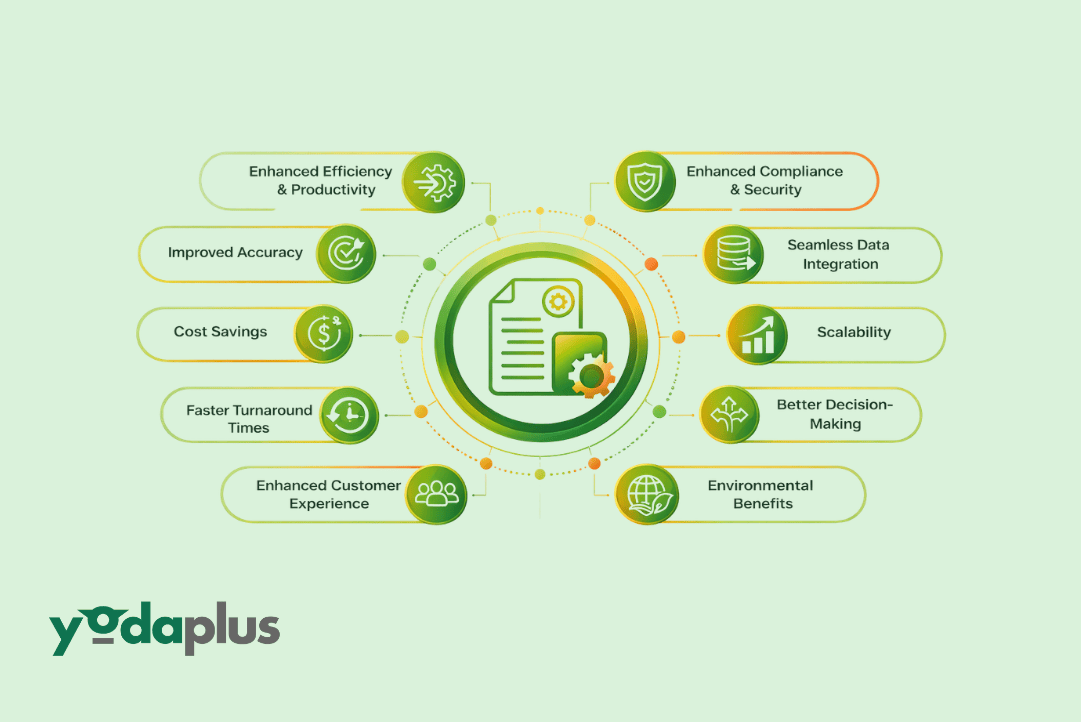
Enterprise infrastructure supports core operations. It ensures reliability, scalability, and governance. Intelligent document processing fits this definition because almost every business process depends on document data.
In procure to pay automation, purchase orders, invoices, and vendor agreements must move without delay. If intelligent document processing fails, the entire procurement automation cycle slows down. Payments get delayed and supplier relationships suffer.
In order to cash automation, sales orders, contracts, and dispatch documents drive billing accuracy. Intelligent document processing ensures that sales data flows correctly into finance systems. This protects revenue and improves forecasting.
When intelligent document processing sits at the infrastructure layer, it integrates with ERP, inventory systems, and financial platforms. It becomes a foundation rather than a patch.
Manufacturing and Retail Depend on Document Accuracy
Manufacturing environments rely on precision. A single invoice mismatch can block production schedules. Data extraction automation must validate quantities, part numbers, and pricing before approval.
Retail environments focus on speed. Procurement automation must process vendor invoices quickly to maintain stock availability. Accounts payable automation depends on clean data from intelligent document processing.
If companies treat intelligent document processing as a small departmental tool, they create silos. But when they treat it as infrastructure, they build a single document intelligence layer that supports procurement automation, order to cash automation, and financial controls.
Intelligent Document Processing Enables Agentic AI Workflows
As enterprises move toward automation maturity, they introduce agentic ai workflows. These workflows do more than execute tasks. They make context-aware decisions based on structured data.
Agentic ai workflows cannot function properly without accurate inputs. Intelligent document processing supplies clean, validated data into these workflows. For example, an AI agent can automatically escalate a pricing anomaly if data extraction automation identifies a mismatch between invoice and contract terms.
Without enterprise-grade intelligent document processing, agentic ai workflows operate on incomplete information. That creates risk instead of value.
Risk Management and Compliance
Compliance is another reason to treat intelligent document processing as infrastructure. Manufacturing and retail companies operate under strict financial and tax regulations.
Procure to pay automation requires traceability. Every purchase order and invoice must be auditable. Intelligent document processing creates structured logs that support audit readiness.
Accounts payable automation benefits from automated validation rules. Data extraction automation reduces human error and strengthens control frameworks. This improves transparency across procurement automation cycles.
Scalability and Business Growth
As companies grow, document volumes increase. Manual review teams cannot scale at the same pace. Intelligent document processing supports expansion without proportional cost increases.
In a growing retail chain, order to cash automation must process more sales transactions every month. Intelligent document processing ensures billing data remains accurate even as volumes rise.
In manufacturing, expanding supplier networks increase invoice complexity. Data extraction automation standardizes formats and reduces dependency on manual intervention.
Treating intelligent document processing as infrastructure ensures systems can handle future growth.
Real Example
Consider a mid-sized manufacturer running procure to pay automation across multiple plants. Each plant receives supplier invoices in different formats. Before deploying intelligent document processing, finance teams manually entered data into ERP. Errors were common. Payment cycles were delayed.
After implementing Enterprise Infrastructure-level intelligent document processing, the company automated invoice validation, integrated accounts payable automation, and linked data extraction automation with ERP. Payment cycles reduced significantly. Audit trails improved. Agentic ai workflows flagged pricing mismatches automatically.
The shift happened because leadership treated intelligent document processing as core infrastructure, not as a pilot tool.
FAQs
1. Is intelligent document processing only for finance teams?
No. Intelligent document processing supports procurement automation, order to cash automation, compliance, and supply chain operations.
2. How does intelligent document processing support procure to pay automation?
It extracts and validates data from purchase orders and invoices, reducing manual errors and speeding approvals.
3. Can agentic ai workflows run without intelligent document processing?
They can run, but they will not perform reliably. Agentic ai workflows need structured and validated document data.
4. Is data extraction automation enough on its own?
No. Data extraction automation is one part of intelligent document processing. Infrastructure-level deployment ensures integration and governance.
Conclusion
Intelligent document processing is not a side project. It is not just a document scanning solution. It is a foundation layer that supports procure to pay automation, procurement automation, accounts payable automation, and order to cash automation. It powers data extraction automation and enables secure agentic ai workflows.
Manufacturing and retail companies that treat intelligent document processing as enterprise infrastructure build stronger control systems, faster workflows, and scalable automation frameworks.
With Yodaplus Supply Chain & Retail Workflow Automation, organizations can design infrastructure-ready intelligent document processing that supports long-term operational excellence.