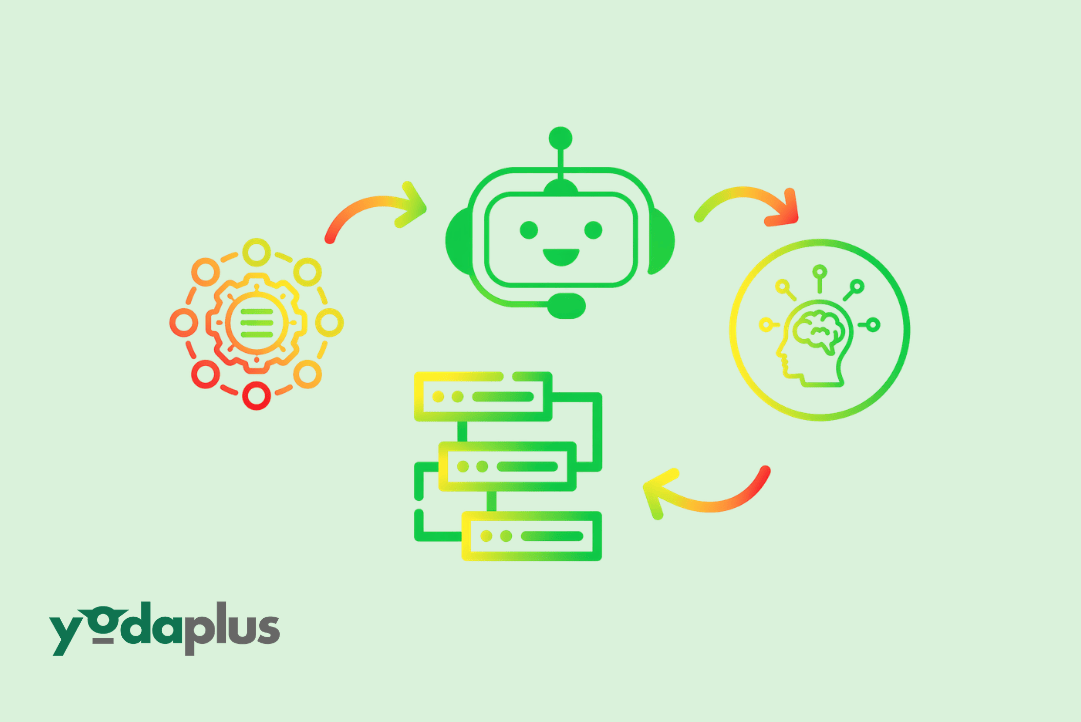
Agentic ERP-Native Workflow Automation in Retail Systems
April 17, 2026 By Yodaplus
ERP systems are no longer just systems of record. They are becoming systems of action. With the rise of Agentic AI and intelligent automation, ERP platforms are shifting from passive data storage to active decision-making engines. This change is driven by the need for faster operations, real-time insights, and reduced manual effort. Retail automation is now evolving into something more dynamic. Instead of predefined workflows, businesses are adopting systems that can think, adapt, and act. Agentic AI introduces AI Agents that can interpret data, trigger actions, and continuously improve workflows without constant human input. This is where ERP-native workflow automation becomes important. It allows businesses to embed intelligence directly into their core systems, making processes smarter and more responsive.
What ERP-Native Workflow Automation Means
ERP-native workflow automation refers to automating business processes directly within the ERP system rather than relying on external tools or manual interventions. Traditional ERP automation follows fixed rules. For example, if an invoice exceeds a threshold, it gets flagged. While useful, these workflows are rigid and struggle with exceptions. With Agentic AI, workflows become adaptive. AI Agents operate inside the ERP environment and take actions based on context, not just rules. They analyze structured and unstructured data, make decisions, and trigger next steps automatically. For example, in invoice processing automation, instead of just validating amounts, the system can read invoices using data extraction automation, match them with purchase orders, identify discrepancies, and suggest resolutions or escalate when needed. This reduces manual effort and improves accuracy.
Role of Agentic AI and AI Agents in ERP Systems
Agentic AI introduces a new layer of intelligence in ERP systems. AI Agents act like digital operators that understand workflows and execute tasks. These agents can monitor transactions continuously, trigger actions based on changing conditions, learn from past decisions, and collaborate with other agents. In agentic ai workflows, multiple agents work together to complete complex tasks. For example, one agent extracts data, another validates it, and a third handles approvals. This coordination makes ERP workflows more flexible and efficient. AI Agents also reduce dependency on manual approvals. Instead of waiting for human intervention, they can make low-risk decisions automatically and escalate only when necessary.
How LLMs Help in Decision-Making and Workflow Execution
Large Language Models bring contextual understanding into ERP systems. They help AI Agents interpret data that traditional systems cannot easily process. In many ERP processes, data is not always structured. Emails, PDFs, and contracts contain valuable information but are difficult to process using rule-based systems. LLMs solve this problem by understanding natural language in documents, extracting relevant information, summarizing insights, and supporting decision-making. For example, in procurement automation, an LLM can analyze supplier emails, extract pricing details, and compare them with historical data. It can then recommend the best supplier based on cost and reliability. LLMs also improve communication between systems and users by generating explanations for decisions, making workflows more transparent.
Key ERP Workflows That Can Be Automated
ERP systems manage multiple business processes. With Agentic AI, many of these workflows can be automated intelligently. Procurement and vendor management benefit from procurement automation where AI Agents analyze supplier performance, automate purchase order creation, and track deliveries in real time. Accounts payable improves with invoice processing automation where systems extract invoice data, match it with purchase orders, and detect discrepancies quickly. Order management becomes faster as systems validate orders, check inventory, and trigger fulfillment automatically. Inventory and supply chain operations improve with retail automation ai, where systems predict demand, optimize stock levels, and automate replenishment decisions. Data handling becomes more efficient with data extraction automation that pulls, cleans, and validates data across systems and generates reports without manual effort.
Benefits for Retail and Supply Chain Operations
ERP-native workflow automation brings measurable benefits for businesses. It speeds up operations by reducing processing time across workflows. It improves accuracy by minimizing human errors in data entry and validation. It enhances decision-making by providing real-time insights and AI-driven recommendations. It supports scalability by allowing systems to handle growing workloads without additional resources. It also improves customer experience by enabling faster order processing and better inventory management.
Challenges and Limitations
Despite the advantages, there are challenges to consider. Data quality issues can impact automation accuracy since AI depends on reliable inputs. Integration complexity arises when connecting AI Agents with existing ERP systems. Governance and control are important because automated decisions must align with business rules and regulations. Over-reliance on automation can create risks if human oversight is reduced too much. Implementation costs can also be a barrier, as deploying Agentic AI solutions requires investment in technology and expertise.
Future of ERP Systems with Intelligent Automation
ERP systems are evolving into intelligent platforms that can operate with minimal human intervention. With Agentic AI, AI Agents, and LLMs working together, future systems will continuously learn, adapt workflows in real time, and provide predictive insights. Retail automation will become more proactive as systems anticipate issues and resolve them before they impact operations. AI Agents will become more specialized, focusing on areas such as finance, procurement, and supply chain. This specialization will improve efficiency and accuracy. Human roles will also shift toward strategy, oversight, and exception handling rather than routine execution.
Conclusion
Agentic ERP-native workflow automation is transforming how businesses operate by embedding intelligence directly into core systems. With Agentic AI, AI Agents, and LLMs, workflows are becoming dynamic and capable of continuous improvement. This shift is especially valuable for retail and supply chain operations where speed, accuracy, and scalability are critical. Yodaplus Agentic AI for Supply Chain & Retail Operations enables organizations to implement intelligent ERP workflows that drive efficiency and better decision-making.
FAQs
What is ERP-native workflow automation?
It is the automation of business processes directly within ERP systems using AI-driven workflows.
How do AI Agents improve ERP workflows?
They automate tasks, make decisions, and adapt workflows based on real-time data.
What role do LLMs play in ERP systems?
They help interpret unstructured data, support decisions, and improve workflow communication.
Which ERP processes benefit the most from automation?
Procurement, invoice processing, order management, and inventory management benefit the most.
Is ERP automation useful for retail businesses?
Yes, it improves efficiency, reduces errors, and enhances customer experience.
What are the risks of ERP automation?
Risks include poor data quality, over-reliance on automation, and governance challenges.