
Industry-Specific Agentic AI Adoption Patterns in 2026
July 27, 2026 By Yodaplus
Agentic AI is not being adopted at the same pace across every industry. Some sectors are using AI agents to automate complex workflows and decision-making, while others are still focused on basic automation and pilot projects. Adoption depends on factors such as regulations, data availability, business complexity, and expected return on investment.
As organizations move beyond chatbots and generative AI, industry-specific use cases are becoming the biggest driver of Agentic AI adoption.
Why Adoption Differs Across Industries
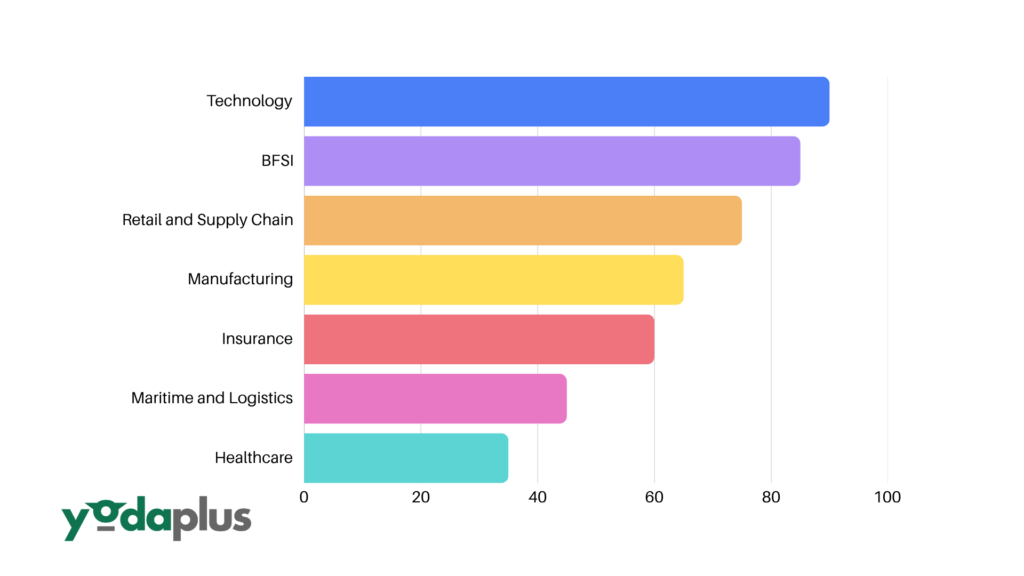
Every industry has unique processes, regulations, and operational priorities.
Factors influencing adoption include:
- Regulatory requirements
- Data maturity
- Process complexity
- Technology infrastructure
- Customer expectations
- Security and compliance needs
Industries with repetitive, data-intensive workflows are generally adopting Agentic AI more quickly.
Banking and Financial Services
Financial institutions are among the fastest adopters.
Agentic AI supports:
- Fraud detection
- Loan processing
- Regulatory compliance
- Financial reporting
- Customer onboarding
- Risk monitoring
Instead of automating individual tasks, AI agents coordinate activities across multiple financial systems, reducing manual work and improving decision-making.
Retail and Supply Chain
Retailers are using Agentic AI to improve operational efficiency across the supply chain.
Common applications include:
- Demand forecasting
- Inventory optimization
- Order management
- Supplier coordination
- Warehouse operations
- Logistics planning
Multiple AI agents can monitor inventory levels, predict demand changes, recommend replenishment, and coordinate deliveries in real time.
Healthcare
Healthcare organizations are adopting Agentic AI cautiously because of strict regulatory requirements.
Current use cases include:
- Clinical documentation
- Appointment scheduling
- Medical coding
- Patient support
- Insurance verification
- Care coordination
Human oversight remains essential for clinical decisions, but AI agents are reducing administrative workloads.
Manufacturing
Manufacturers are using Agentic AI to improve production efficiency.
Applications include:
- Predictive maintenance
- Production scheduling
- Quality inspections
- Supplier management
- Inventory planning
- Factory operations
AI agents can analyse sensor data, detect equipment issues, schedule maintenance, and adjust production plans with minimal human intervention.
Insurance
Insurance companies are using Agentic AI throughout the policy lifecycle.
Examples include:
- Claims processing
- Fraud detection
- Underwriting support
- Customer service
- Policy administration
- Risk assessment
AI agents help reduce claim processing times while improving consistency and accuracy.
Maritime and Logistics
Shipping companies are increasingly exploring Agentic AI for operational efficiency.
Use cases include:
- Voyage planning
- Compliance monitoring
- Fleet maintenance
- Document management
- Cargo tracking
- Port operations
AI agents help crews and operations teams access critical information faster while supporting regulatory compliance.
Technology and Software
Technology companies have adopted Agentic AI rapidly.
Common applications include:
- Software development
- Code reviews
- Testing
- Infrastructure monitoring
- Security operations
- Customer support
AI agents often collaborate throughout the software development lifecycle.
Public Sector
Government agencies are beginning to evaluate Agentic AI for citizen services and internal operations.
Potential applications include:
- Document processing
- Public service delivery
- Regulatory monitoring
- Tax administration
- Permit approvals
- Case management
Many governments are introducing AI governance frameworks before deploying autonomous systems at scale.
Common Adoption Patterns
Although industries have different priorities, several adoption trends appear consistently.
Organizations typically begin with:
- Internal process automation
- Administrative workflows
- Document-intensive operations
- Employee productivity
As confidence grows, they expand into:
- Decision support
- Multi-agent collaboration
- End-to-end workflow automation
- Customer-facing services
This phased approach helps organizations manage risk while demonstrating measurable business value.
Challenges Across Industries
Despite growing adoption, organizations continue to face similar challenges.
These include:
- Data quality
- Integration with legacy systems
- Regulatory compliance
- Cybersecurity
- AI governance
- Change management
- Workforce training
Successful deployments focus on solving business problems rather than simply implementing new technology.
What the Future Looks Like
Over the next few years, Agentic AI is expected to become part of everyday business operations.
Organizations are likely to build AI ecosystems where multiple specialized agents collaborate across departments, integrate with enterprise systems, and automate increasingly complex workflows.
Rather than replacing employees, these systems will support faster decisions, improve productivity, and allow teams to focus on higher-value work.
Conclusion
Agentic AI adoption is following different paths across industries, shaped by operational needs, regulatory requirements, and digital maturity. Financial services are focusing on compliance and risk management, retailers are improving supply chains, manufacturers are optimizing production, healthcare providers are reducing administrative workloads, and insurers are streamlining claims and underwriting. Although adoption patterns differ, the common objective remains the same: using intelligent AI agents to automate complex workflows, improve decision-making, and increase operational efficiency.
Yodaplus Agentic AI Services
Yodaplus helps enterprises adopt Agentic AI across industries by building intelligent, production-ready solutions tailored to specific business needs. Whether automating financial operations, supply chain workflows, maritime processes, or enterprise decision-making, our AI agents integrate seamlessly with existing systems to improve efficiency, strengthen compliance, and deliver measurable business outcomes.
FAQs
Every industry has different regulations, operational processes, technology infrastructure, and business priorities, which influence how quickly Agentic AI can be adopted.
Banking, financial services, retail, supply chain, technology, manufacturing, and insurance are among the leading adopters because they have data-intensive and process-driven operations.
Yes. Healthcare organizations are using Agentic AI for administrative tasks such as documentation, scheduling, coding, and insurance verification, while maintaining human oversight for clinical decisions.
Common challenges include legacy systems, data quality, cybersecurity, regulatory compliance, AI governance, and workforce readiness.
While adoption speeds will vary, most industries are expected to incorporate Agentic AI into their operations as the technology matures and organizations identify high-value business use cases.