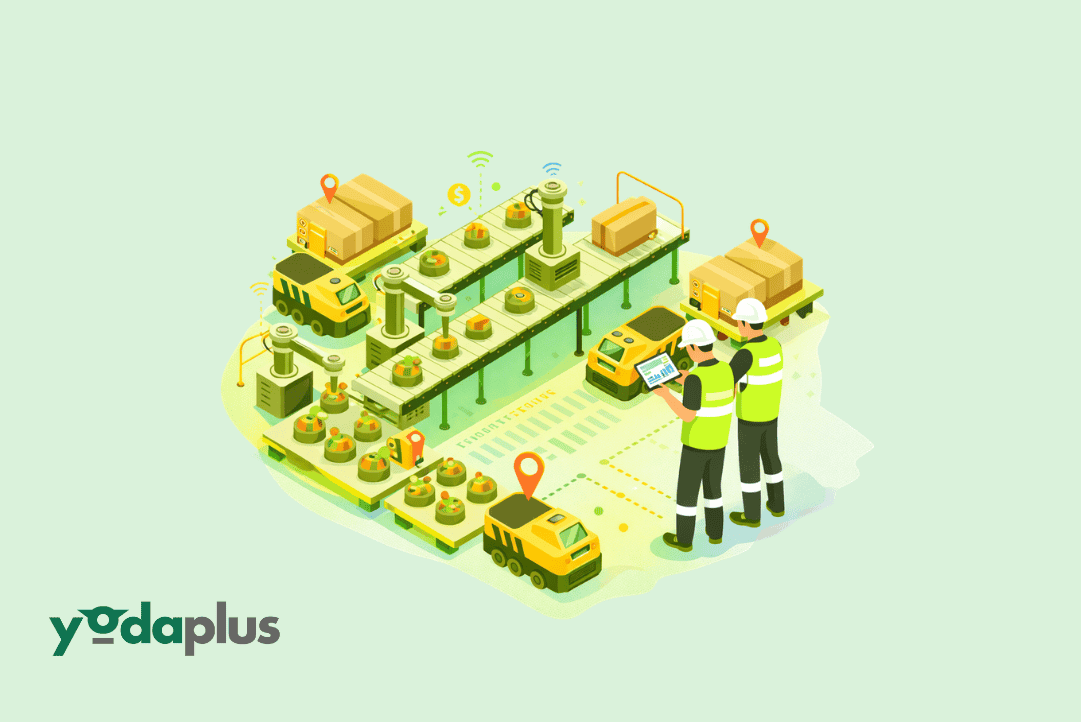
Agentic Sales Forecasting in Retail Automation
February 27, 2026 By Yodaplus
Retailers depend on accurate sales forecasting to plan inventory, manage promotions, and protect margins. Yet many forecasts still rely on static reports and outdated models. In today’s dynamic market, that is not enough. Customer demand changes quickly. Supply chains face disruptions. Competitors adjust pricing in real time.
This is where retail automation powered by agentic systems changes the game.
Agentic sales forecasting does more than predict numbers. It observes patterns, adjusts decisions, and triggers actions. Instead of waiting for managers to react, systems act with context. They connect store data, warehouse stock, and supplier timelines. They also align with manufacturing automation and upstream planning.
In this blog, we explore how agentic AI transforms sales forecasting, why it matters for modern retailers, and how it strengthens intelligent retail automation.
The Limits of Traditional Sales Forecasting
Traditional sales forecasting often works like this: pull last year’s data, apply growth percentages, adjust for seasonality, and publish a monthly forecast. This approach may work in stable markets. But retail is rarely stable. A festival discount, a viral social trend, or a logistics delay can break the forecast. Many teams then manually adjust numbers. This creates delays and confusion. Even when companies adopt AI sales forecasting, they sometimes treat it as a standalone prediction tool. It generates a number, but it does not connect to execution systems. The forecast sits in a dashboard. Without integration into retail automation, forecasts remain passive insights. They do not drive decisions in real time.
What Is Agentic Sales Forecasting
Agentic sales forecasting combines ai sales forecasting with decision-making logic. It works inside broader agentic AIworkflows. Instead of only predicting demand, the system monitors live sales data, tracks inventory levels, evaluates supplier lead times, adjusts replenishment rules, and triggers actions automatically. For example, if demand spikes in one region, the system detects it early. It reallocates stock from a nearby warehouse. It may even signal production adjustments through manufacturing automation. This is not just prediction. It is coordinated action across systems. At the core, agentic forecasting becomes a central engine within retail automation.
How Agentic AI Workflows Improve Forecast Accuracy
Continuous learning plays a major role. In traditional sales forecasting, models update weekly or monthly. Agentic systems learn daily or even hourly. With AI sales forecasting, models analyze transaction data, weather inputs, marketing campaigns, and store-level performance. As new signals arrive, the system recalculates risk. This improves forecast accuracy and reduces surprises. Context-aware adjustments also matter. Agentic systems understand context such as a product trending on social media, a supplier delay, or a store renovation. In classic forecasting, humans manually adjust for these events. In intelligent retail automation, the system captures context and modifies forecasts automatically. This is where agentic AI workflows add value. They link prediction with operational rules. Automated execution completes the loop. Forecasts influence replenishment, pricing, and promotions. In advanced retail automation, the forecast directly triggers actions. If projected demand exceeds safety stock, the system places a purchase order. If demand drops, the system reduces production via manufacturing automation. If excess inventory builds, the system suggests promotional discounts. This closed loop reduces delays and improves responsiveness.
Connecting Retail and Manufacturing Automation
Retail does not operate in isolation. Demand signals affect production planning. Agentic retail automation integrates with manufacturing automation systems. When forecasts change, production schedules adjust. Imagine a fashion retailer launching a new line. Initial sales exceed expectations. The agentic forecasting engine detects the trend. It updates sales forecasting models and sends a signal to manufacturing to increase output. Without this connection, retailers risk stockouts or lost revenue. When AI sales forecasting connects directly to upstream systems, the entire supply chain becomes agile.
Real-World Example
Consider a supermarket chain with 300 stores. Traditionally, each store manager reviews weekly forecasts. Adjustments happen through email and spreadsheets. By the time changes reach the warehouse, demand has already shifted. Now imagine the same retailer using intelligent retail automation with agentic capabilities. The system tracks daily POS data, compares actual sales with forecast, detects anomalies, adjusts store-level replenishment, and sends updated demand signals to central warehouses. All this happens automatically within agentic AI workflows. As a result, stockouts reduce, waste decreases, forecast accuracy improves, and working capital frees up. This is the real promise of modern retail automation.
Benefits of Agentic Sales Forecasting
Higher forecast accuracy is the first benefit. Continuous learning improves AI sales forecasting performance. Models adjust as new data arrives. Faster decision cycles also matter. Traditional systems rely on meetings and manual reviews. Agentic systems act instantly within retail automation platforms. Reduced inventory risk follows. Better sales forecasting reduces excess inventory and markdown losses. It also prevents stockouts. Alignment across functions improves when forecasts connect with manufacturing automation, procurement, and logistics. Planning becomes synchronized. Scalable intelligent retail automation allows retailers to expand to hundreds of stores without manual forecasting bottlenecks. Agentic systems scale naturally within retail automation frameworks.
Challenges to Consider
While agentic systems offer strong benefits, retailers must prepare for change. Data quality must improve. Legacy systems must integrate smoothly. Teams must trust automated decisions. Effective retail automation requires clean data pipelines and strong governance. Companies should also monitor model performance and ensure transparency in AI sales forecasting logic.
Building an Agentic Sales Forecasting Framework
Start by strengthening data foundations. Unify POS, inventory, and supplier data. Ensure consistency across channels. Next, deploy ai sales forecasting models that support real-time updates and adaptive learning. Then integrate forecast outputs directly into retail automation systems so replenishment and pricing respond automatically. Connect these systems to manufacturing automation so production planning adjusts in line with demand signals. Finally, enable agentic ai workflows with defined rules and guardrails. Set limits for automatic purchase orders or production increases to maintain control. By following this approach, retailers move from predictive analytics to decision intelligence.
Frequently Asked Questions
What makes agentic sales forecasting different from standard AI models. Standard ai sales forecasting predicts demand. Agentic systems operate within agentic ai workflows that trigger actions automatically inside retail automation platforms.
Can small retailers benefit from retail automation. Yes. Even smaller retailers can adopt scalable intelligent retail automation tools through cloud-based systems.
How does manufacturing automation support retail forecasting. When sales forecasting signals rising demand, manufacturing automation adjusts production schedules and prevents supply shortages.
Is agentic forecasting risky. With proper governance and guardrails inside retail automation systems, risk remains controlled and measurable.
The Future of Retail Automation
Retail is moving toward autonomous operations. In the future, retail automation platforms will not just forecast demand. They will simulate scenarios, test pricing strategies, and optimize promotions automatically. Intelligent retail automation will combine demand sensing, replenishment, and financial planning into one system. Agentic ai workflows will coordinate decisions across stores, warehouses, and factories. Retailers who adopt advanced ai sales forecasting now will gain a competitive edge. They will reduce waste, improve customer satisfaction, and respond faster to market changes.
Conclusion
Agentic sales forecasting represents the next step in retail automation. It transforms sales forecasting from a static prediction exercise into a living, decision-driven system. By combining ai sales forecasting, agentic ai workflows, and integration with manufacturing automation, retailers can build agile and resilient operations. This approach strengthens intelligent retail automation across the entire value chain. Organizations looking to modernize forecasting and execution can explore Yodaplus Supply Chain & Retail Workflow Automation. With the right strategy, retailers can move beyond dashboards and create truly autonomous planning systems.