Why Tool-Calling Works Better with Open Models
January 5, 2026 By Yodaplus
Have you ever seen an AI agent call the wrong tool or forget why it called a tool in the first place? This issue is common in real-world AI systems. The problem is not tool-calling itself. The problem is how closed models handle control, memory, and reasoning.
Open models work better with tool-calling because they fit naturally into agentic AI systems. They allow AI agents to reason, decide, and act with clarity across long-running workflows.
What tool-calling means in AI systems
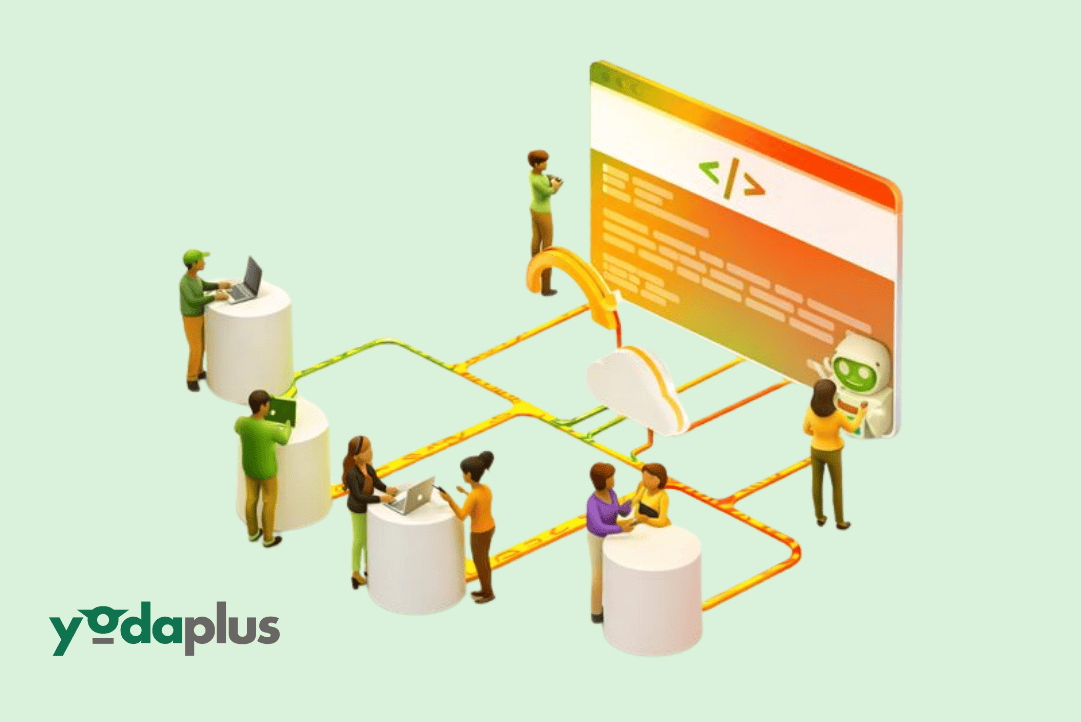
Tool-calling allows an AI agent to interact with external systems. These tools may include APIs, databases, search engines, or internal software.
In Artificial Intelligence systems, tool-calling enables real work. AI agents fetch data, update records, trigger workflows, and validate outputs. This turns AI from a chatbot into an operational system.
For this to work well, the AI agent must understand when to call a tool, which tool to call, and how to use the result.
Why tool-calling depends on reasoning
Tool-calling is a reasoning task. The AI agent must interpret context, choose an action, and evaluate the result.
In agentic AI, this decision happens many times within a workflow. AI agents plan steps, call tools, review outputs, and decide the next action.
This requires persistent context and clear control flow. Without these, tool-calling becomes unreliable.
How closed models weaken tool-calling
Closed models often hide internal reasoning. Tool calls happen inside opaque systems. Developers see the output but not the decision path.
This causes several issues:
-
AI agents call tools without clear intent
-
Tool results lose context
-
Errors are hard to trace
-
AI workflows break silently
Closed APIs also reset context frequently. The AI agent forgets why it called a tool and how the result fits into the workflow.
This weakens AI-powered automation and limits trust in AI applications.
Open models give developers control
Open models work well with agentic frameworks because they expose reasoning and control.
Developers can decide how tool-calling works. AI agents can pause, reflect, and retry. Each decision stays visible.
This transparency supports explainable AI and reliable AI systems. Teams can debug tool usage and refine workflows without guessing.
Open models treat tool-calling as part of the AI system, not a hidden feature.
Tool-calling in agentic AI frameworks
Agentic AI frameworks rely on multiple AI agents working together. Some agents plan. Others execute. Others verify results.
Tool-calling sits at the center of this coordination. Open models allow AI agents to share context and tool results cleanly.
Frameworks that support MCP, workflow agents, and multi-agent systems depend on this openness. Closed models restrict how tools integrate into agentic workflows.
As a result, open models scale better in complex AI workflows.
Why memory matters for tool-calling
Tool-calling without memory fails quickly. AI agents must remember which tools were used, what data was returned, and what decisions followed.
Open models integrate easily with external memory systems. AI agents store tool outputs as vector embeddings and retrieve them using semantic search.
This allows intelligent agents to reason across steps. Tool-calling becomes deliberate instead of reactive.
Closed systems often rely on prompt-based memory, which breaks under token limits.
Impact on long-running workflows
In long-running workflows, tool-calling happens repeatedly. AI agents monitor signals, update systems, and adapt actions.
Closed models struggle here because context fades. Tool usage becomes inconsistent. Human intervention increases.
Open models support persistent reasoning. AI agents maintain goals and use tools in a structured way across time.
This improves AI-driven analytics, autonomous systems, and AI-powered automation.
Tool-calling in business and supply chain AI
In Artificial Intelligence in business, tool-calling connects AI to real operations. In AI in logistics and AI in supply chain optimization, agents call tools to check inventory, update plans, and handle exceptions.
AI agents in supply chain workflows rely on consistent tool behavior. Open models support this by preserving context and decision history.
Inventory optimization improves when AI agents remember past tool outcomes. Closed systems struggle to maintain this continuity.
Responsible AI and tool usage
Responsible AI practices require control and auditability. Teams must understand why an AI agent called a tool and what happened next.
Open models support AI risk management by exposing tool-calling logic. Explainable AI becomes practical when decisions are traceable.
Closed models hide these details, which creates trust gaps in enterprise environments.
Why open models win in real systems
Tool-calling works best when AI systems prioritize structure over shortcuts. Open models enable this structure.
They allow developers to design AI workflows where tools are first-class components. AI agents reason, act, and learn across workflows.
This is why open models outperform closed systems in agentic AI solutions.
Final thoughts
Tool-calling is where AI systems meet reality. It demands reasoning, memory, and control. Closed models struggle because they hide decisions and reset context.
Open models work better with tool-calling because they enable agentic AI systems that preserve context, expose reasoning, and support reliable workflows.
For teams building AI workflows that rely on tools and long-running decisions, Yodaplus Automation Services helps design agentic AI systems where tool-calling is reliable, transparent, and scalable.
FAQs
What is tool-calling in AI?
It is the ability of an AI agent to interact with external systems like APIs or databases.
Why do closed models struggle with tool-calling?
They limit visibility, reset context, and hide reasoning steps.
Do open models automatically improve tool-calling?
No, but they enable system designs that make tool usage reliable.
Why is tool-calling important for agentic AI?
It allows AI agents to act, not just respond, within real workflows.