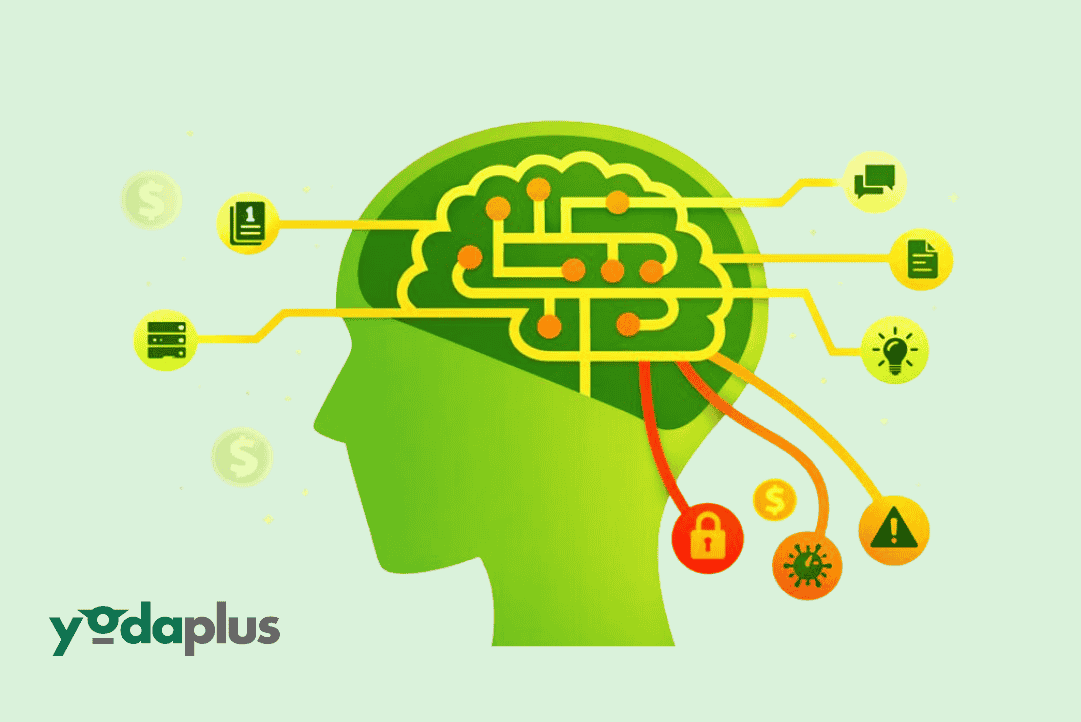
Phi-4 and the Rise of Task-Specific LLMs
January 8, 2026 By Yodaplus
What if artificial intelligence did not try to do everything at once, but focused on doing one job really well?
That question explains why Phi-4 and other task-specific LLM models are gaining attention. For years, the AI world chased bigger models, more parameters, and broader abilities. Today, the focus is shifting toward purpose-built AI systems that deliver reliable outcomes for defined tasks.
This shift matters for businesses that want usable artificial intelligence solutions instead of experimental demos.
What is changing in the AI model landscape
Large language models started as general-purpose tools. They could write text, answer questions, and support conversational AI across many domains. These models rely on deep learning, neural networks, and massive AI model training pipelines.
While powerful, general models often struggle with consistency, cost, and control. Enterprises need AI technology that fits into workflows, respects risk boundaries, and works with existing data systems.
This is where task-specific LLMs enter the picture.
What makes Phi-4 different
Phi-4 represents a new generation of LLM design. Instead of maximizing size, it focuses on efficiency, reasoning quality, and task alignment. The goal is not broad creativity but reliable performance.
Phi-4 supports use cases where AI agents must follow rules, understand structured context, and act within defined limits. This approach fits well with agentic AI systems and knowledge-based systems.
By narrowing scope, Phi-4 improves explainable AI, reduces hallucination risk, and supports responsible AI practices.
Why task-specific LLMs matter for agentic AI
Agentic AI relies on intelligent agents that can plan, act, and adapt. These agents often operate inside AI workflows that connect data, tools, and decisions.
A task-specific LLM makes this possible by:
-
Understanding domain language through semantic search and vector embeddings
-
Supporting prompt engineering that enforces role AI behavior
-
Integrating with AI agent frameworks and MCP AI patterns
-
Enabling AI-powered automation without unpredictable responses
When an AI agent has a focused model, it becomes easier to manage AI risk management and reliability.
How Phi-4 supports AI agents and workflows
In agentic frameworks, AI agents often work as autonomous agents or workflow agents. Each agent handles a clear responsibility such as analysis, classification, summarization, or validation.
Phi-4 fits naturally into this design because it works well as:
-
An AI agent software component inside multi-agent systems
-
A reasoning engine for autonomous systems
-
A controlled LLM for AI-driven analytics and reporting
-
A support model for conversational AI with bounded scope
This design aligns with agentic AI MCP and agentic ops, where models must cooperate rather than compete.
Cost, performance, and control advantages
General AI models demand high compute and complex orchestration. Task-specific models like Phi-4 reduce these challenges.
Benefits include:
-
Lower inference cost compared to broad LLM models
-
Faster responses in production AI systems
-
Easier monitoring of AI behavior and performance
-
Better fit for reliable AI requirements
For businesses deploying artificial intelligence at scale, these factors matter more than raw model size.
Phi-4 and generative AI in real use cases
Generative AI software often fails when used without constraints. Phi-4 works best when paired with structured data, domain logic, and clear objectives.
Common gen AI use cases include:
-
AI-driven analytics that explain trends and anomalies
-
NLP pipelines for document understanding
-
Data mining tasks with controlled outputs
-
Knowledge-based systems powered by semantic search
-
AI workflows that connect LLMs with tools and APIs
Instead of acting as a single super model, Phi-4 becomes part of a larger AI framework.
The role of MCP in task-specific models
Model Context Protocol, or MCP, plays a key role in agentic AI models. It defines how context, memory, roles, and tools connect to an AI agent.
With Phi-4, MCP enables:
-
Clear separation between model logic and business logic
-
Safer AI system design with predictable behavior
-
Scalable AI agent frameworks across teams
This structure supports the future of AI, where systems are modular, auditable, and adaptable.
Reliable AI over flashy AI
AI innovation is no longer about impressive demos. It is about building AI systems that teams trust.
Task-specific LLMs improve reliable AI by:
-
Limiting scope and reducing error surfaces
-
Supporting explainable AI outputs
-
Aligning with responsible AI practices
-
Improving AI risk management
This approach also supports self-supervised learning strategies where models improve within safe boundaries.
What this means for the future of AI
The future of AI will not belong to one giant model. It will belong to networks of AI agents powered by specialized models.
Phi-4 signals a move toward:
-
Practical agentic AI over experimental AI
-
AI workflows that mirror real business processes
-
Autonomous AI systems that operate with clarity
-
Gen AI tools designed for production use
This shift benefits teams that want results, not surprises.
Conclusion
Phi-4 and task-specific LLMs show that artificial intelligence does not need to be massive to be useful. Focused models enable better AI agents, safer AI systems, and stronger AI-powered automation.
As businesses adopt agentic frameworks and MCP-based designs, task-aligned models will become the foundation of scalable AI innovation.
Yodaplus Automation Services helps organizations design, deploy, and manage these modern AI systems with a strong focus on reliability, control, and real-world impact.
FAQs
Is Phi-4 a replacement for large LLM models?
No. Phi-4 works best alongside larger models as part of a modular AI system.
Does task-specific AI limit creativity?
It limits unnecessary variability, which improves accuracy and trust in business workflows.
Are task-specific LLMs better for enterprises?
Yes. They support AI risk management, explainable AI, and predictable outcomes.