Agent OS Architecture: Models, Memory, Tools, and Workflows
December 26, 2025 By Yodaplus
How do modern AI systems move beyond single prompts and become reliable, long running workers? The answer lies in Agent OS architecture. As Artificial Intelligence expands across business functions, teams need a structured way to run AI agents with control, memory, and clear execution paths. An Agent OS provides this structure. This blog explains the core architecture of an Agent OS, focusing on models, memory, tools, and workflows, and how these parts work together to enable secure and scalable agentic AI.
Models: The Reasoning Core of an Agent OS
At the center of every Agent OS sits the model layer. This is where LLM models provide reasoning, language understanding, and decision making. When people ask what is AI in an Agent OS, this layer often comes to mind first. AI technology here includes generative AI, machine learning, NLP, and Deep Learning working together.
LLMs power intelligent agents by interpreting intent, generating responses, and planning actions. In agentic AI systems, models do more than respond. They guide workflow agents, evaluate outcomes, and adapt behavior. Open models support prompt engineering and AI model training aligned with internal data. This improves reliable AI outcomes and supports explainable AI needs.
Models must remain flexible and observable since they drive every AI system decision.
Memory: Context, State, and Continuity
Memory is what separates simple AI applications from autonomous systems. In an Agent OS, memory stores goals, user context, task state, and past actions. Without memory, AI agents repeat work and lose continuity.
Memory often includes short term context and long term knowledge. Vector embeddings and semantic search help retrieve relevant information without exposing full datasets. Knowledge-based systems reduce hallucinations and support consistent reasoning. Agentic frameworks often play a role by managing shared context across agents.
Strong memory design enables AI workflows that span minutes, hours, or even days. It also supports AI-driven analytics and Conversational AI that feel coherent and useful.
Tools: Controlled Access to the Real World
Tools connect AI agents to real systems. In an Agent OS, tools include APIs, databases, internal services, and automation scripts. Tool access must be controlled to support AI risk management.
Workflow agents use tools to fetch data, run calculations, or trigger actions. Intelligent agents decide which tool to use and when. This separation improves safety. AI agent software should always operate within defined permissions and identity based access.
By routing all tool calls through the Agent OS, teams gain visibility and control. This supports responsible AI practices and helps audit AI-powered automation.
Workflows: Orchestrating Agent Behavior
Workflows define how work gets done. In an Agent OS, workflows coordinate agents, tools, and memory into repeatable processes. This is where agentic frameworks become critical.
AI workflows break complex tasks into steps. One agent may retrieve data, another may analyze it, and a third may validate results. Multi-agent systems enable this collaboration. Workflow agents focus on execution, while intelligent agents focus on reasoning.
Clear workflows prevent uncontrolled autonomy. Autonomous AI should always follow defined paths with checkpoints. This approach enables safe agentic AI use cases across business teams.
How These Layers Work Together
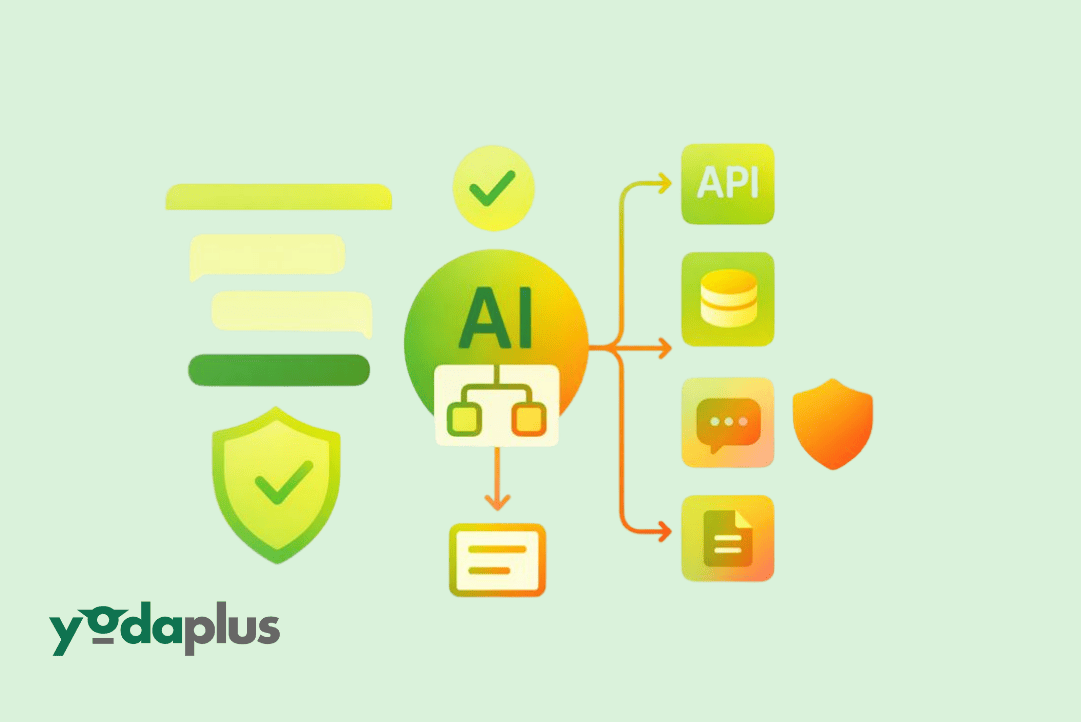
Agent OS architecture only works when models, memory, tools, and workflows operate as a single system. The model reasons about goals and context. Memory provides continuity and knowledge. Tools allow interaction with systems. Workflows ensure structured execution.
For example, in AI in logistics or AI in supply chain optimization, an agentic AI platform can monitor signals, analyze data, and suggest actions. Each step flows through the Agent OS architecture, ensuring transparency and control.
This integrated design supports Artificial Intelligence in business without sacrificing trust.
Security and Governance Across the Architecture
Security must be built into every layer of an Agent OS. Models need guardrails and explainable AI outputs. Memory must respect access controls. Tools require strict permissions. Workflows need logging and checkpoints.
An Agent OS enforces governance by centralizing control. AI risk management becomes easier because actions are traceable. Responsible AI practices rely on this visibility. Without architectural discipline, autonomous systems create unnecessary risk.
This is why architecture matters as much as model choice.
Business Benefits of a Structured Agent OS
A clear Agent OS architecture turns AI innovation into reusable infrastructure. Teams can build AI applications faster and maintain them more easily. AI-driven analytics become accessible through natural language interfaces. Conversational AI connects users to real workflows.
Non technical users benefit from intelligent agents that guide tasks instead of replacing roles. Over time, the architecture supports the future of AI by enabling safe autonomy and continuous improvement.
Designing an Agent OS the Right Way
Start with a simple use case such as internal search or reporting. Define models, memory, tools, and workflows clearly. Avoid premature autonomy. Test AI workflows under real conditions. Monitor performance and refine prompts and permissions.
Treat the Agent OS as a core AI framework, not an experiment. This mindset ensures scalability and trust.
Conclusion
Agent OS architecture is the foundation of modern agentic AI systems. Models provide reasoning, memory ensures continuity, tools enable action, and workflows enforce structure. Together, these layers create autonomous systems that remain secure and predictable. Organizations building enterprise-grade Agent OS platforms can explore Yodaplus Automation Services as a solution provider for scalable and secure Artificial Intelligence solutions.
FAQs
What is an Agent OS architecture?
It is the structured design that manages models, memory, tools, and workflows for AI agents.
Why is memory important in agentic AI?
Memory provides context and continuity, which enables reliable AI behavior.
Do all Agent OS platforms support autonomous AI?
Yes, but autonomy should always operate within defined workflows and controls.
Is Agent OS architecture suitable for enterprise use?
Yes, when combined with governance, security, and AI risk management.