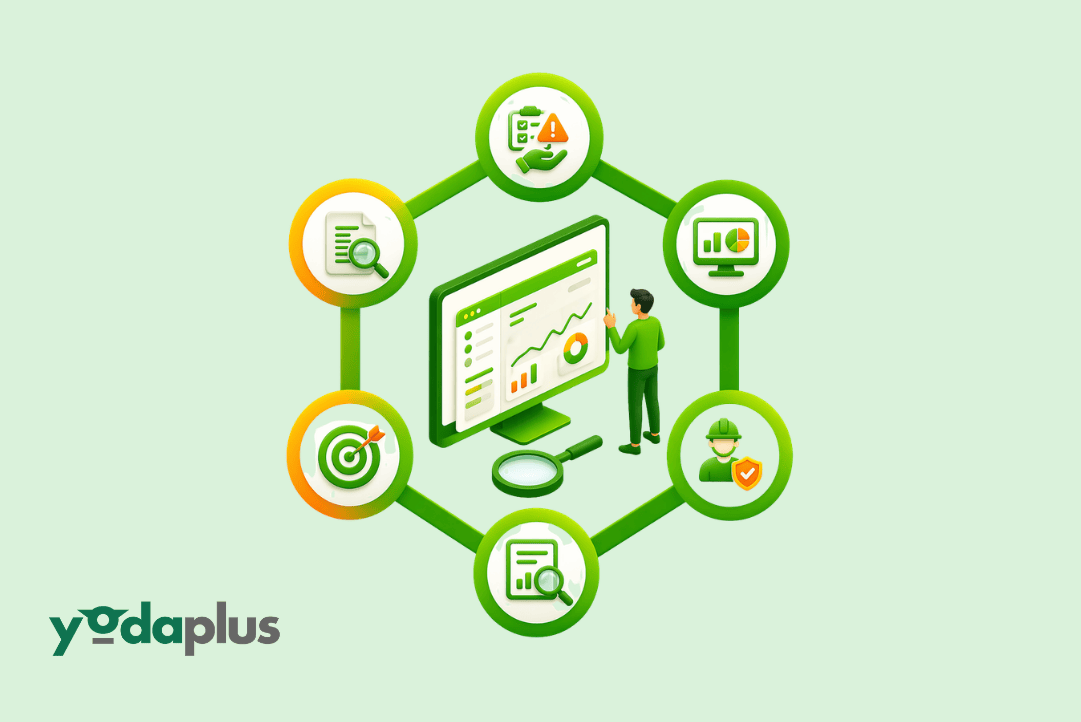
Monitoring Automation Performance in Financial Services Systems
April 23, 2026 By Yodaplus
Monitoring automation is critical because automated systems operate at speed and scale, and even small issues can quickly multiply into larger operational risks. In financial environments, where accuracy, compliance, and timing matter, tracking how systems perform is essential. Without proper monitoring, financial services automation can become unreliable, opaque, and difficult to control.
Why Monitoring Matters in Financial Services Automation
Automation improves efficiency, but it also reduces direct human oversight. This makes visibility into system behavior more important than ever.
Monitoring helps organizations:
- Ensure workflows are running as expected
- Detect errors early
- Maintain compliance and audit readiness
- Improve decision accuracy over time
According to Gartner, organizations that actively monitor automation performance can improve operational efficiency by up to 25 percent. This shows that monitoring is not just about control, it is also about continuous improvement in automation in financial services.
Key Metrics for Monitoring Automation Performance
Metrics provide a clear way to measure how well systems are performing. In financial services automation, the focus is on both operational efficiency and decision quality.
Process Efficiency Metrics
These metrics track how quickly and smoothly workflows operate:
- Processing time per task
- Workflow completion rates
- Throughput volume
- Queue wait times
These indicators help identify bottlenecks and inefficiencies.
Accuracy and Quality Metrics
Accuracy is critical in financial systems. Metrics include:
- Error rates
- Exception frequency
- Decision accuracy
- Rework rates
In intelligent automation in banking, accuracy metrics are used to evaluate both rule-based and AI-driven decisions.
Risk and Compliance Metrics
Monitoring must also focus on compliance:
- Number of compliance breaches
- Audit trail completeness
- Suspicious activity detection rates
These metrics ensure that automation in financial services meets regulatory requirements.
Customer Impact Metrics
Automation directly affects customer experience:
- Transaction success rates
- Resolution time for issues
- Customer complaint trends
Tracking these metrics ensures that automation delivers value to customers.
Role of Dashboards in Performance Monitoring
Dashboards are the primary interface for monitoring automation systems. They provide a real-time view of performance across workflows.
Features of Effective Dashboards
- Consolidated view of key metrics
- Real-time updates
- Visual indicators such as charts and alerts
- Drill-down capabilities for detailed analysis
Dashboards allow teams to quickly understand system health and take action when needed.
In ai in banking, dashboards often include predictive insights, helping teams anticipate issues before they occur.
AI-Driven Alerts and Insights
AI enhances monitoring by moving from reactive to proactive systems. Instead of waiting for problems to occur, AI identifies patterns and predicts potential issues.
Intelligent Alert Systems
AI-powered alerts can:
- Detect anomalies in transaction patterns
- Identify unusual spikes in error rates
- Trigger alerts for delayed workflows
This reduces response time and minimizes impact.
Predictive Monitoring
In artificial intelligence in banking, predictive models analyze historical data to forecast potential failures. For example, a system may predict increased transaction failures during peak hours and adjust resources accordingly.
Root Cause Analysis
AI can also help identify the root cause of issues by analyzing multiple data points. This makes it easier to resolve problems quickly and effectively.
Performance Feedback Loops
Monitoring is not just about observation, it is about improvement. Feedback loops connect monitoring systems with decision systems to enable continuous optimization.
How Feedback Loops Work
- Performance data is collected
- Insights are generated
- Adjustments are made to workflows or models
- Results are monitored again
This cycle ensures that financial services automation evolves over time.
In intelligent automation in banking, feedback loops are often automated, allowing systems to self-optimize based on performance data.
Real-World Use Cases
Monitoring plays a key role across financial operations.
Transaction Processing
Banks monitor transaction success rates and processing times to ensure smooth operations.
Fraud Detection
Systems track detection accuracy and false positives to improve performance.
Loan Processing
Monitoring helps identify delays in approvals and improve workflow efficiency.
Compliance Monitoring
Dashboards track regulatory metrics and ensure that all requirements are met.
Challenges in Monitoring Automation
Despite its importance, monitoring comes with challenges.
Data Overload
Automated systems generate large volumes of data. Identifying meaningful insights can be difficult.
Integration Issues
Data from different systems may not be easily integrated, limiting visibility.
Alert Fatigue
Too many alerts can overwhelm teams and reduce effectiveness.
Balancing Detail and Simplicity
Providing enough detail without making dashboards complex is a key challenge.
Best Practices for Effective Monitoring
To overcome these challenges, organizations should:
- Define clear and relevant metrics
- Use centralized monitoring platforms
- Implement AI-driven alert systems
- Regularly review and refine dashboards
- Align monitoring with business objectives
These practices ensure that automation in financial services remains efficient and reliable.
The Role of AI in Future Monitoring Systems
AI is transforming how automation is monitored. Future systems will rely heavily on ai in banking to provide deeper insights and faster responses.
According to Deloitte, AI-driven monitoring can reduce incident response times by up to 50 percent. This highlights the growing importance of artificial intelligence in banking in performance management.
AI will continue to enhance:
- Predictive analytics
- Automated decision-making
- Real-time optimization
This will make intelligent automation in banking more resilient and scalable.
FAQs
1. Why is monitoring important in financial services automation?
Monitoring ensures that automated systems perform accurately, remain compliant, and deliver consistent results.
2. What metrics are used to monitor automation performance?
Metrics include processing time, error rates, decision accuracy, compliance indicators, and customer impact measures.
3. How do dashboards help in monitoring?
Dashboards provide real-time visibility into system performance and allow teams to quickly identify and resolve issues.
4. What role does AI play in monitoring automation?
AI enables predictive insights, anomaly detection, and faster response to issues.
5. What challenges do companies face in monitoring automation?
Challenges include data overload, integration issues, alert fatigue, and balancing detail with usability.
Conclusion
Monitoring is a critical component of successful financial services automation. It ensures that systems operate efficiently, remain compliant, and continuously improve. By combining clear metrics, real-time dashboards, AI-driven alerts, and feedback loops, financial institutions can maintain control over complex automated workflows. As ai in banking and artificial intelligence in banking continue to evolve, monitoring systems will become more intelligent, proactive, and essential for managing automation at scale.
For organizations looking to move beyond basic automation and build scalable, adaptive workflows, solutions like Yodaplus Agentic AI forFinancial Operations can help design and implement systems that are built for growth, compliance, and real-time decision-making.