How Can AI Classify Workflow Exceptions Automatically?
April 22, 2026 By Yodaplus
AI classifies workflow exceptions using pattern recognition and data analysis. It studies past data, identifies patterns in errors, and assigns categories to new exceptions as they occur. This allows systems to handle disruptions quickly and consistently. In intelligent automation, this capability is critical because workflows often face unexpected inputs, delays, or mismatches that cannot be handled by fixed rules alone.
What Are Workflow Exceptions
Workflow exceptions are events that disrupt a standard process. These can occur when data is missing, incorrect, delayed, or does not match expected formats.
In supply chain automation, exceptions may include delayed shipments, inventory mismatches, or incorrect supplier data. In retail automation, they may involve pricing errors, stock discrepancies, or failed transactions.
Automation systems are designed for predictable flows, but real-world operations are dynamic. This is why exception handling becomes a key part of automation strategies.
Types of Exceptions in Automated Workflows
Exceptions can be broadly grouped into a few categories.
Data-related exceptions occur when input data is incomplete, incorrect, or inconsistent. For example, a missing invoice field or incorrect product code.
Process-related exceptions arise when a workflow step fails. This could be due to system downtime or integration issues.
External exceptions are caused by factors outside the system. These include supplier delays, customer changes, or regulatory updates.
Decision-related exceptions occur when a system cannot determine the next step due to ambiguity.
In intelligent automation, identifying the type of exception is the first step toward resolving it effectively.
How AI Classifies Exceptions
AI uses data patterns and historical records to classify exceptions. It analyzes past cases to understand how similar issues were categorized and resolved.
When a new exception occurs, the system compares it with known patterns. It looks at data points such as error type, source, timing, and impact.
AI models assign a category based on this analysis. For example, a mismatch between order and invoice data may be classified as a data exception.
This classification happens in real time, allowing workflows to respond immediately.
AI also improves over time. As more data is processed, the system becomes better at identifying patterns and classifying exceptions accurately.
Classification Logic in AI Systems
The logic behind AI classification is based on multiple inputs.
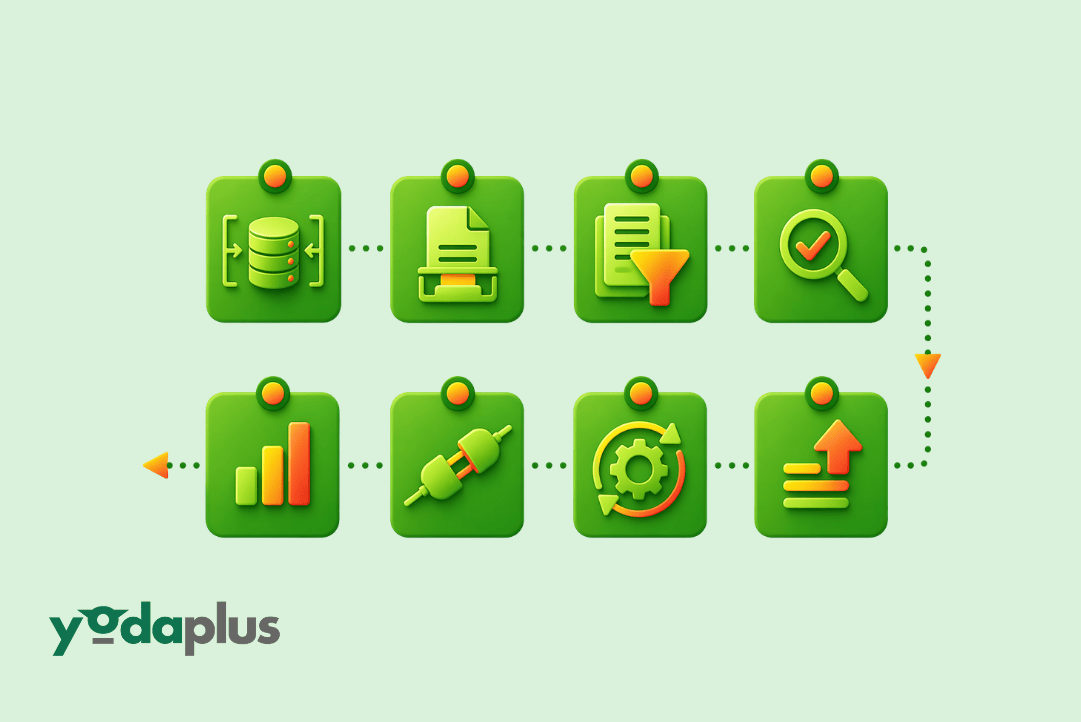
First, the system collects data from different sources. This may include transaction records, system logs, and user inputs.
Next, it processes the data using algorithms that identify relationships and patterns. These algorithms can detect similarities between current and past exceptions.
The system then assigns a classification label. This label determines how the exception will be handled.
In data extraction automation, AI plays a key role by extracting structured information from unstructured data. This ensures that classification is based on accurate inputs.
Finally, the system triggers the appropriate response. This may include automated resolution, escalation, or further analysis.
Role of AI Models in Exception Classification
Different AI models are used for classifying workflow exceptions.
Supervised learning models are trained on labeled data. They learn how to classify exceptions based on historical examples.
Unsupervised models identify patterns without predefined labels. They are useful for detecting new or unknown types of exceptions.
Natural language processing models help analyze text-based data. This is important when exceptions involve emails, documents, or customer messages.
In intelligent automation, these models work together to provide a comprehensive classification system.
AI ensures that exceptions are not just identified but also understood in context.
Benefits of Automated Exception Classification
Automated classification offers several benefits.
Speed is one of the most important advantages. AI can classify exceptions instantly, reducing delays in workflows.
Accuracy is another benefit. By using data-driven models, the system reduces errors that occur in manual classification.
Consistency is also improved. AI applies the same logic across all cases, ensuring uniform handling of exceptions.
Scalability is a key advantage in supply chain automation and retail automation. As operations grow, AI can handle increasing volumes of exceptions without additional effort.
These benefits make intelligent automation more effective and reliable.
Impact on Workflow Efficiency
Exception classification directly affects workflow efficiency.
When exceptions are classified quickly, they can be resolved faster. This reduces bottlenecks and keeps processes moving.
Automated classification also enables better prioritization. Critical exceptions can be identified and addressed first.
In automation systems, this leads to smoother operations and improved performance.
By reducing manual intervention, organizations can focus on higher-value tasks.
Challenges in AI-Based Classification
Despite its advantages, AI-based classification has challenges.
One challenge is data quality. Poor data leads to incorrect classification.
Another challenge is handling new types of exceptions. AI models may struggle with cases that do not match existing patterns.
There is also the need for continuous updates. As workflows change, models must be retrained to stay accurate.
In intelligent automation, addressing these challenges is essential for maintaining effectiveness.
Future of Exception Classification
The future of exception classification lies in more advanced AI systems.
These systems will combine multiple data sources and use real-time analysis to improve accuracy.
They will also integrate with broader automation platforms, enabling end-to-end workflow management.
As AI continues to evolve, exception classification will become more predictive. Systems will identify potential issues before they occur.
This will further enhance the efficiency of automation systems.
Conclusion
AI-driven classification is transforming how workflow exceptions are handled. By using pattern recognition and data analysis, AI enables intelligent automation systems to identify and categorize exceptions in real time. This improves speed, accuracy, and consistency across workflows. In supply chain automation and retail automation, this capability is essential for managing complex operations. While challenges such as data quality and evolving patterns remain, the benefits of automated classification are significant. Solutions like Yodaplus Supply Chain & Retail Workflow Automation Services help organizations build systems that can handle exceptions efficiently and maintain smooth operations.