Intelligent Document Processing: How Document Classification Works
March 30, 2026 By Yodaplus
Document classification in intelligent document processing is the process of identifying and categorizing documents based on their type and content. It helps systems understand whether a document is an invoice, purchase order, receipt, email, or contract. Once classified, the document can be routed to the right workflow for further processing. This step is critical because it ensures that data extraction automation and validation happen correctly. Without proper classification, automation pipelines can fail or produce errors.
Why document classification is important
In business operations, documents come in large volumes and different formats. Manually sorting them takes time and increases the risk of mistakes. Intelligent document processing uses AI to automate this step.
Document classification ensures that each file is directed to the correct workflow. For example, invoices go through invoice processing automation, while purchase orders are routed into procurement process automation systems.
Accurate classification improves efficiency and reduces delays. It also ensures that downstream processes like validation and approval work smoothly.
Types of document classification in IDP systems
There are different ways classification is handled in intelligent document processing.
Rule based classification uses predefined rules such as keywords or document layout. For example, if a document contains the word invoice, it is classified as an invoice.
Machine learning based classification uses trained models to identify document types based on patterns. These models improve over time as they learn from new data.
Hybrid classification combines rules and machine learning. This approach provides better accuracy and flexibility.
Modern IDP systems rely more on machine learning because it handles variations in document formats better.
Step by step process of document classification
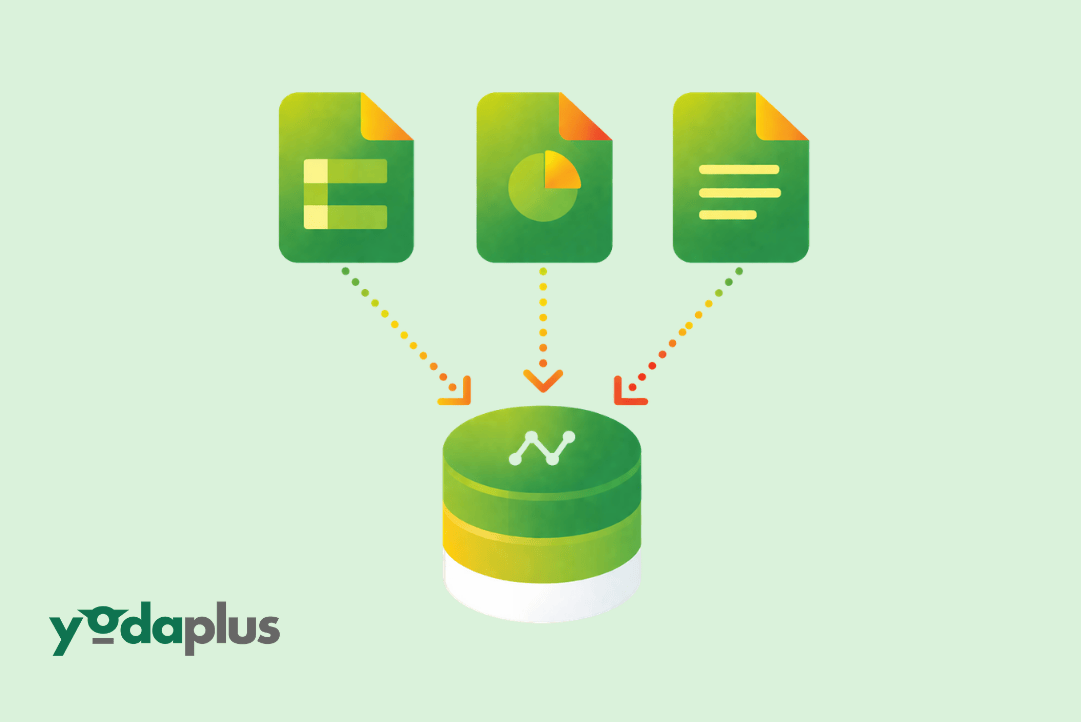
The classification process starts when a document enters the system. This can be a scanned file, PDF, or email attachment.
The first step is preprocessing. OCR for invoices converts the document into machine readable text. This allows the system to analyze its content.
Next, feature extraction takes place. The system identifies key elements such as keywords, layout, and structure.
After this, classification models analyze the features and assign a document type. For example, the system may classify a file as an invoice or a purchase order.
Once classified, the document is routed to the next stage, such as data extraction automation or validation workflows.
This structured flow ensures that documents are processed efficiently and accurately.
Role of OCR in document classification
OCR for invoices plays a foundational role in classification. Without converting documents into text, AI models cannot analyze them.
OCR extracts text from scanned or image based files. This text is then used by classification models to identify document types.
Advanced OCR tools also capture layout information, which improves classification accuracy.
By enabling text recognition, OCR for invoices supports both classification and data extraction automation.
How machine learning improves classification accuracy
Machine learning models learn from examples. They are trained using large datasets of documents labeled by type.
Over time, these models become better at identifying patterns. They can handle variations in layout, language, and format.
For example, different vendors may use different invoice formats. A machine learning model can still classify them correctly.
This improves the performance of intelligent document processing systems and supports reliable invoice processing automation.
Continuous learning also allows systems to adapt to new document types and business needs.
Integration with downstream workflows
Document classification is not a standalone step. It connects directly with other processes in intelligent document processing.
Once a document is classified, it moves to data extraction automation. Relevant fields are captured and validated.
In finance workflows, classified invoices are processed through invoice processing automation.
In supply chain operations, classified purchase orders are handled through procurement process automation.
Agentic ai workflows further enhance this process by enabling systems to make decisions and route documents dynamically.
This integration ensures a smooth and efficient automation pipeline.
Challenges in document classification
Despite its benefits, document classification comes with challenges.
One challenge is handling unstructured documents. These documents lack a fixed format, making classification more complex.
Another issue is poor quality scans. Low resolution images can affect OCR accuracy, which impacts classification.
Variability in document formats is also a challenge. Businesses receive documents from multiple sources, each with different layouts.
To overcome these challenges, organizations need robust models and continuous training.
Improving data quality and using advanced tools can also enhance classification accuracy.
Best practices for effective classification
To achieve accurate document classification, businesses should follow certain best practices.
Start with clean and high quality data. This improves OCR performance and model accuracy.
Use a combination of rule based and machine learning approaches. This provides better results across different document types.
Regularly train and update models with new data. This helps the system adapt to changes.
Integrate classification with end to end workflows. This ensures that documents move smoothly through the system.
Monitor performance and make improvements based on feedback. Continuous optimization is key to success.
Future of document classification in IDP
The future of document classification is evolving with advancements in AI.
Systems are becoming more intelligent and capable of understanding context. This improves accuracy in handling unstructured data.
Agentic ai workflows are expected to play a bigger role. These systems can make decisions and adapt workflows dynamically.
Integration with other technologies like predictive analytics will further enhance capabilities.
As intelligent document processing continues to evolve, document classification will become more accurate and efficient.
Conclusion
Document classification is a core component of intelligent document processing. It ensures that documents are correctly identified and routed to the right workflows. With technologies like OCR for invoices, data extraction automation, and machine learning, businesses can automate this process and improve efficiency.
Accurate classification supports critical workflows such as invoice processing automation and procurement process automation. It also enables advanced capabilities through agentic ai workflows.
As organizations handle increasing volumes of documents, adopting intelligent document processing becomes essential. Yodaplus Supply Chain & Retail Workflow Automation services help businesses implement advanced document classification systems that improve accuracy, efficiency, and scalability.