How Accounts Payable Automation Integrates With ERP Systems
January 16, 2026 By Yodaplus
Accounts payable automation often sounds simple. Scan invoices, match them, and post payments. In reality, real value appears only when accounts payable automation integrates deeply with ERP systems. Without tight integration, automation stays limited and teams still depend on manual checks. In procure to pay automation, ERP integration connects purchasing, receiving, finance, and reporting into one continuous flow. This blog explains how that integration works in practice and why it matters for manufacturing automation and retail automation.
Why ERP integration matters in procure to pay automation
ERP systems sit at the center of enterprise operations. They manage vendors, purchase orders, GRN records, inventory, and financial postings. When accounts payable automation software operates outside the ERP, teams face data gaps, delays, and reconciliation issues. True procure to pay efficiency requires the AP system to read from and write back to the ERP in real time. This ensures invoice status, approvals, and payments remain consistent across systems. ERP integration also supports compliance and audit readiness by maintaining a single source of truth.
How invoices enter the system
Integration starts at invoice intake. Invoices arrive through email, supplier portals, or EDI. Intelligent document processing plays a key role here. Using ocr for invoices and data extraction automation, the system captures supplier name, invoice number, line items, tax values, and totals. These extracted fields are validated against ERP master data. Vendor codes, PO references, and currency rules are checked automatically. This step feeds structured invoice data directly into ERP workflows without manual entry. This is the foundation of invoice processing automation.
Connecting purchase orders and GRN data
ERP systems already store PO and GRN information. This makes integration powerful. When an invoice enters the AP system, it pulls PO details from ERP, including quantity, pricing, and delivery terms created during purchase order creation. It also fetches GRN records to confirm what was actually received. This enables accurate invoice matching without human intervention. In manufacturing process automation, where partial deliveries are common, GRN validation prevents overpayment. Tight integration ensures purchase order automation and receiving data stay aligned with finance.
How invoice matching works inside ERP workflows
Once invoice data aligns with PO and GRN records, invoice matching software applies rules. These rules define acceptable tolerances for quantity or price differences. When invoices meet criteria, the system posts them directly into ERP as approved payables. When mismatches appear, the system flags exceptions. Automated invoice matching software reduces approval cycles and limits manual reviews. This step strengthens accounts payable automation by allowing finance teams to focus only on genuine exceptions.
Role of agentic AI workflows in ERP integration
Traditional integrations rely on fixed rules. Agentic AI workflows go further. They manage decisions across systems. An AI agent can identify recurring supplier errors, recommend rule updates, or route exceptions to the correct approver. Over time, these workflows adapt based on outcomes. This makes procure to pay process automation more resilient. Agents also connect AP data with upstream processes like procurement automation and downstream flows like order to cash automation. This cross-process visibility improves financial control.
ERP integration across manufacturing and retail automation
In manufacturing automation, ERP integration supports production planning and inventory accuracy. When AP systems confirm invoices quickly, material costs update faster. This feeds into sales forecasting and cost planning models. In retail automation, frequent supplier invoices demand speed. Retail automation ai benefits when ERP systems receive real-time AP updates. This prevents payment delays and supplier disputes. Both sectors depend on seamless procurement process automation to operate at scale.
How accounts payable automation connects to order to cash
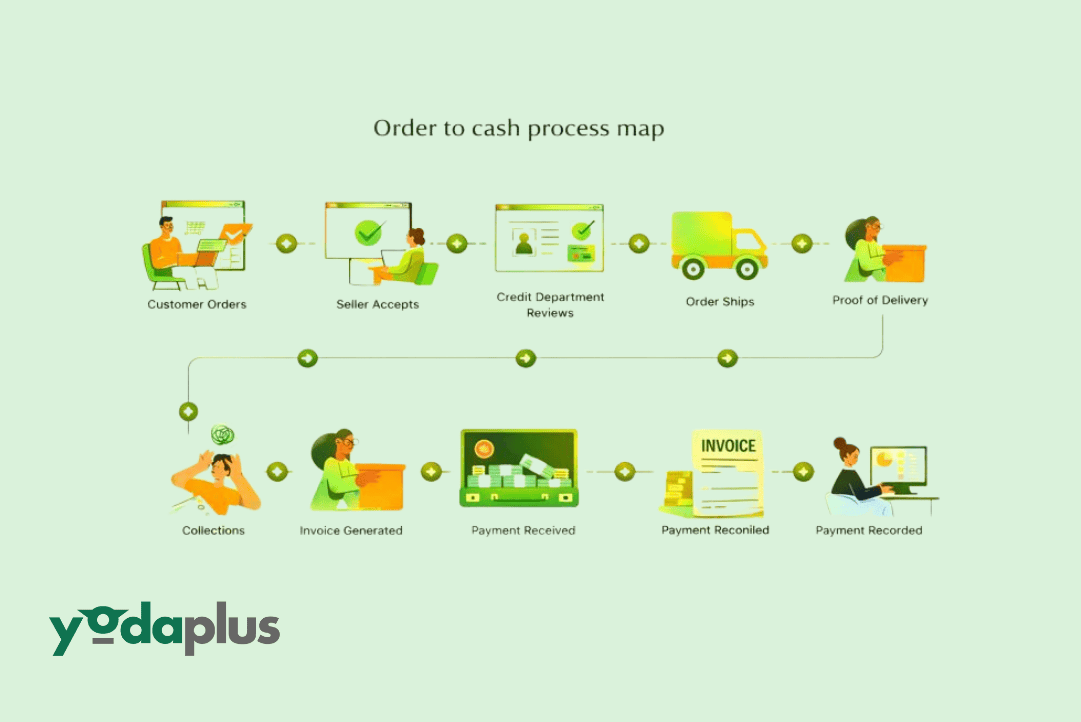
Although AP focuses on payables, ERP integration links it indirectly to order to cash cycles. Clean purchasing data improves cost visibility, which influences pricing and margins. This connection supports order to cash process automation by ensuring financial data remains consistent across receivables and payables. When AP automation feeds reliable data into ERP, it strengthens reporting, forecasting, and financial planning across the enterprise.
Common integration challenges to watch for
ERP integration is not plug and play. Common challenges include inconsistent master data, poorly defined approval rules, and limited exception handling. Systems fail when integrations rely only on OCR without context. This is why intelligent document processing and workflow logic matter. Successful deployments treat ERP integration as a process redesign, not a software add-on.
FAQs
Does accounts payable automation replace ERP systems?
No. It enhances ERP systems by automating invoice handling and approvals.
Is OCR enough for ERP integration?
No. OCR supports extraction, but validation and matching require automation logic.
Can this work with older ERP platforms?
Yes. Most systems integrate through APIs or batch processing when designed properly.
How does this improve sales forecasting?
Accurate cost data improves margin analysis and supports ai sales forecasting.
Final thoughts
Accounts payable automation delivers real value only when it integrates tightly with ERP systems. With Yodaplus Automation Services, organizations combine intelligent document processing, invoice matching, and agentic AI workflows into a connected procure to pay automation flow. This integration supports manufacturing, retail, and finance teams with accuracy, speed, and control. When done right, ERP integration turns AP automation into a core operational capability, not just a finance tool.